GMP vs. ChatGPT Business: Enterprise AI & Growth Stack Comparison
Executive Summary: Core Distinction
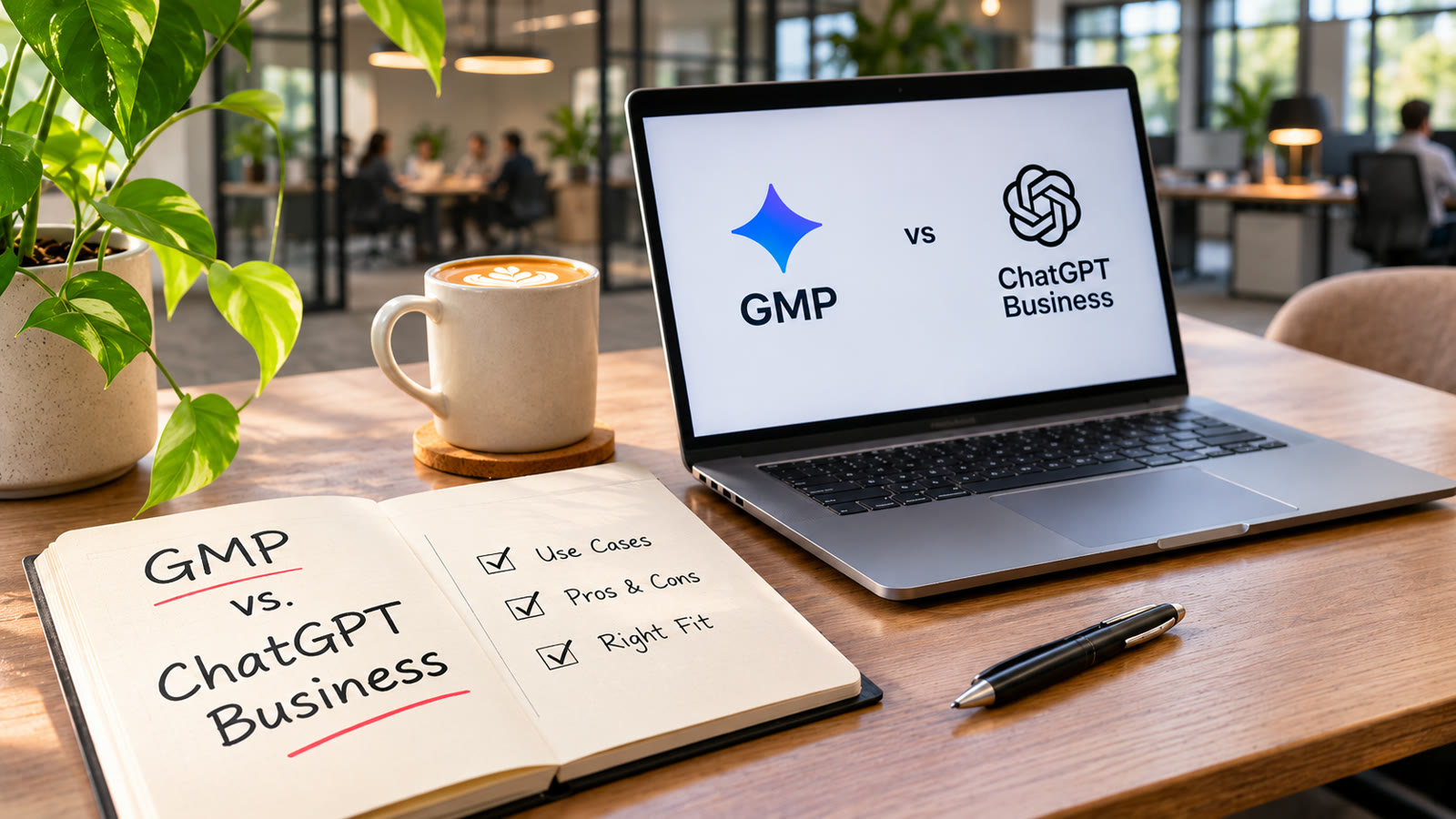
When modern organizations evaluate their enterprise software stack, a fundamental choice emerges: Should we invest in the Google Marketing Platform (GMP / Google Workspace ecosystem with Gemini) or ChatGPT Business?
- Google Marketing Platform & Workspace Ecosystem: Built for enterprise data infrastructure, ad media purchasing, and native document collaboration. It seamlessly connects Google Analytics (GA4), Search Ads 360, Display & Video 360, and core productivity tools (Gmail, Docs, Drive) using Gemini AI as an inline copilot.
- ChatGPT Business: Built as an autonomous AI-first workspace. It provides teams with shared company context, persistent background AI agents (Dots), deep codebase execution (Codex), and end-to-end task execution (ChatGPT Work).
"Agencies and enterprises don't struggle to find software tools; they struggle to close the gap between having tools and getting real work executed. Google's ecosystem is your central operational data backbone, while ChatGPT Business acts as the execution engine sitting on top of it. Treating them as complementary rather than strictly mutually exclusive is often where high-growth teams win."
Deep-Dive Comparison & Feature Breakdown
To evaluate how each platform performs in daily enterprise operations, we examine five critical dimensions:
| Dimension | Google Ecosystem (GMP / Workspace) | ChatGPT Business |
|---|---|---|
| Primary Focus | Ad inventory, enterprise marketing data, and core team collaboration (Docs/Drive). | End-to-end task execution, automated workflows, and complex problem-solving. |
| AI Delivery | Gemini AI: Embedded inside Docs, Sheets, and Gmail as an inline helper. | Dots & ChatGPT Work: Always-on agents that run in background and execute tasks. |
| Software Engineering | Basic code assistance via Gemini inside Google Cloud / IDX. | Codex: Full codebase execution—inspects repos, fixes bugs, runs tests, creates PRs. |
| Team Collaboration | Document-centric (real-time editing on Google Docs / Sheets / Drive). | Spaces & Pages: Shared living pages with embedded AI context & team prompts. |
| Data Governance | Enterprise compliance (GDPR, SOC2) via GSuite Admin permissions. | Dedicated workspace with zero model training, SSO, and admin spend controls. |
Key Capability Analysis
- 1. Always-on AI Agents vs. Inline Copilots: ChatGPT Business features Dots (proactive, always-on AI agents) and ChatGPT Work. You assign a broad goal (e.g., 'synthesize 5 campaign reports into a finance model'), and the agent executes background work, checking in only for human approval. Google's Gemini operates inline within Drive files and Gmail, functioning as an on-demand copilot.
- 2. Software Engineering (Codex): ChatGPT Business includes native access to Codex across your codebase. Engineering teams can refactor code, run tests, and issue pull requests automatically. Google handles developer tools separately via Google Cloud / Firebase / IDX.
- 3. Enterprise Analytics & Media: Google Marketing Platform is unmatched for programmatic ad buying, multi-channel attribution, and GA4 tracking. ChatGPT Business excels at combining qualitative context (sales call notes, customer feedback) with quantitative CRM data exports.
SEO, AEO, and GEO Strategic Perspectives
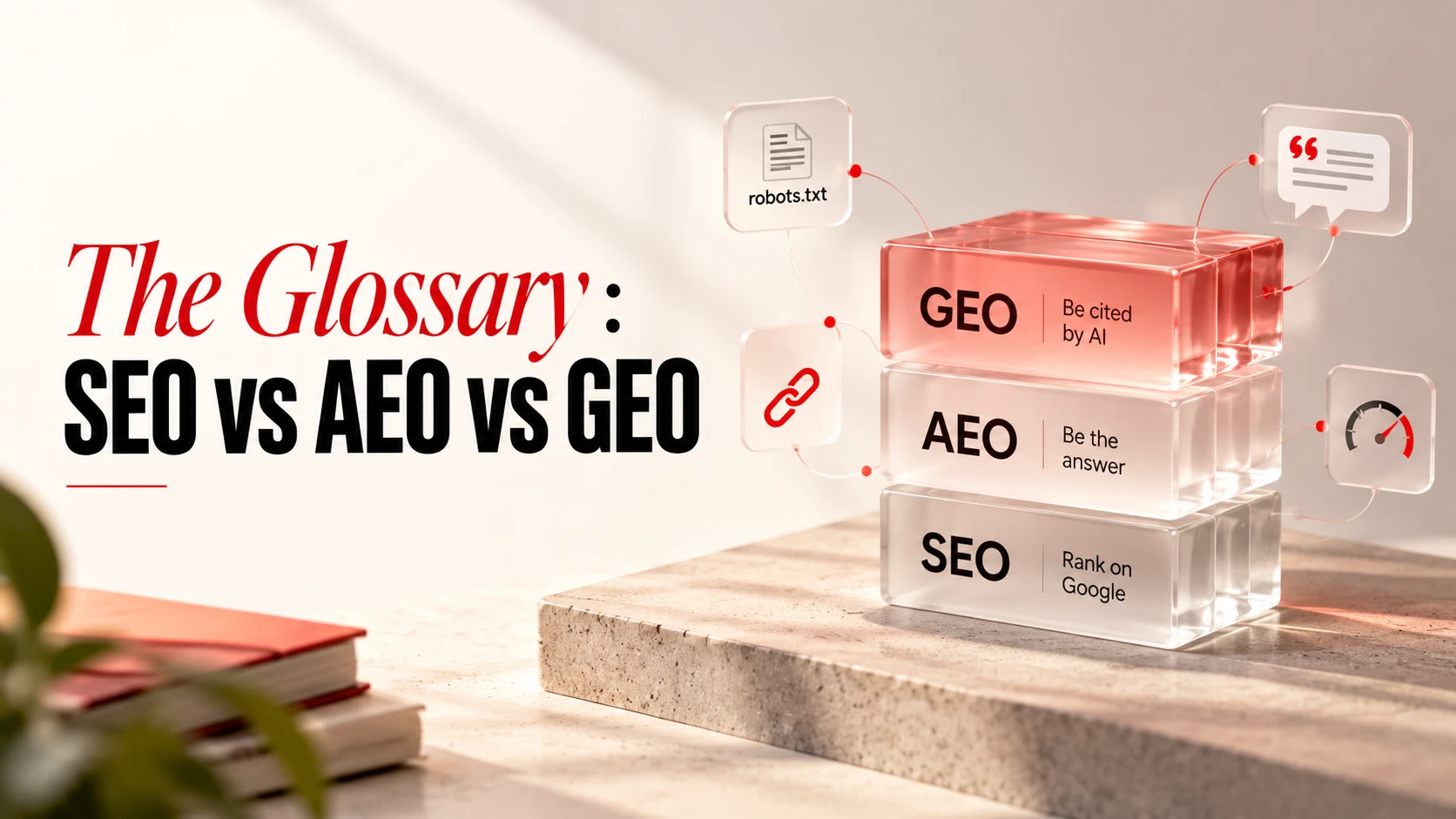
Deploying these enterprise AI solutions directly impacts how your brand is discovered across search engines and generative answer engines. Modern search optimization requires a three-pillar strategy:
The Three Pillars of Modern Search Visibility
- 1. SEO (Search Engine Optimization): Focuses on high-ranking placements on traditional Google SERPs through page speed, technical site architecture, authority building, and high-intent keywords. Google Marketing Platform integrations with Google Search Console and Analytics provide real-time indexation feedback.
- 2. AEO (Answer Engine Optimization): Focuses on winning Google's Featured Snippets, 'People Also Ask' blocks, and direct answer carousels. Content must be structured with clean header hierarchies, concise 40-60 word direct-answer summaries, and proper FAQ schema markup.
- 3. GEO (Generative Engine Optimization): Focuses on ensuring your brand and products are cited when users ask conversational questions in generative AI tools like ChatGPT, Claude, Perplexity, and Gemini. AI models cite sources with high information density, clear brand entity references, and structured JSON-LD data.
Our Strategic Perspective: At RankNexus.ai, we developed dedicated AI Visibility Monitors and GEO Readiness tools. Ranking #1 on Google is no longer sufficient if generative AI engines omit your business from their top conversational recommendations. Winning the next decade of organic growth requires optimizing for both search algorithms and LLM context windows simultaneously.
Strategic Recommendation Framework
- Choose Google Ecosystem (GMP / Gemini) if: Your core priority is large-scale media buying, real-time Google Drive collaboration, and keeping AI tools strictly bound within existing GSuite security permissions.
- Choose ChatGPT Business if: Your organization requires deep software engineering automation (Codex), autonomous task execution via agents (Dots), and cross-functional AI context pages.
- Adopt a Hybrid Deployment model if: Maintain Google Workspace as your operational storage and identity backbone, while selectively assigning ChatGPT Business seats to strategy, engineering, and content teams to maximize output speed.
Frequently asked questions
What is the primary operational difference between GMP/Workspace and ChatGPT Business?
The primary distinction lies in infrastructure vs. execution. Google Marketing Platform & Workspace: Acts as your central operational data backbone. It manages media buying (DV360), conversion analytics (GA4), and document storage (Drive/Docs), using Gemini AI as an inline copilot to assist writing and summarize files. ChatGPT Business: Acts as an autonomous task execution engine. It uses persistent AI agents (Dots) to run background workflows and Codex to inspect, build, and deploy code directly within software repositories.
Can ChatGPT Business completely replace Google Workspace or GMP?
No. ChatGPT Business is designed to run on top of existing enterprise infrastructure rather than replace core cloud foundations. It does not host domain emails (Gmail), act as a primary cloud storage repository (Google Drive), or manage programmatic ad inventory (Google Marketing Platform). Most high-growth enterprises deploy a hybrid stack, retaining Google Workspace for identity and data storage while giving teams ChatGPT Business for complex problem-solving and coding automation.
How do data privacy and security compare between both platforms?
Both platforms offer enterprise privacy protections by excluding company data from public model training by default. Google Workspace / Gemini: Mapped directly to existing GSuite Admin permissions. Data residency, retention rules, and HIPAA BAA coverage apply natively if included in your Google enterprise agreement. ChatGPT Business: Offers single sign-on (SSO), data encryption, workspace admin spend controls, and strict non-training policies. However, dedicated compliance APIs, customer-managed encryption keys, and HIPAA BAAs require upgrading from the Business tier to ChatGPT Enterprise.
Which platform is better for engineering and software development?
ChatGPT Business. It natively includes access to Codex, which allows developers to connect codebases, run automated tests, fix bugs, and draft reviewed pull requests within a unified workflow. Google requires separate developer tooling (such as Gemini Code Assist or Google Cloud IDX) to achieve similar software engineering depth.
How does Generative Engine Optimization (GEO) differ from traditional SEO?
SEO (Search Engine Optimization): Focuses on ranking web pages on traditional search engines (like Google SERPs) using keywords, page speed, technical site architecture, and authoritative backlinks. GEO (Generative Engine Optimization): Focuses on optimizing site content so AI models (like ChatGPT, Perplexity, and Gemini) cite your brand, tools, and services when answering conversational queries. GEO relies on high information density, clear brand entity references, direct-answer structuring, and JSON-LD schema markup.
How do ad options differ between Google Search Ads and ChatGPT Ads?
Google Search Ads (GMP/Google Ads): Targets users based on explicit keyword queries at the bottom of the funnel when intent to purchase is highest. ChatGPT Ads: Matches sponsored units to the conversational context of ongoing multi-turn chats. It is best suited for middle-of-funnel research, comparison guides, and solution discovery. (Note: Paid ads on ChatGPT operate on a separate system and do not shape or alter organic AI recommendations).
What is the recommended strategy for a growing agency or business?
Deploy a dual-layered (hybrid) architecture. Maintain Google Marketing Platform and Google Workspace as your operational storage, identity, and media backbone. Then, assign ChatGPT Business seats to strategy, technical, and content teams to accelerate task execution, code generation, and cross-functional project deliverables.
Want this done for your site?
Run a free audit and see exactly what to fix for Google and AI search.