AI SEO field guide (2026): how AI search cites brands
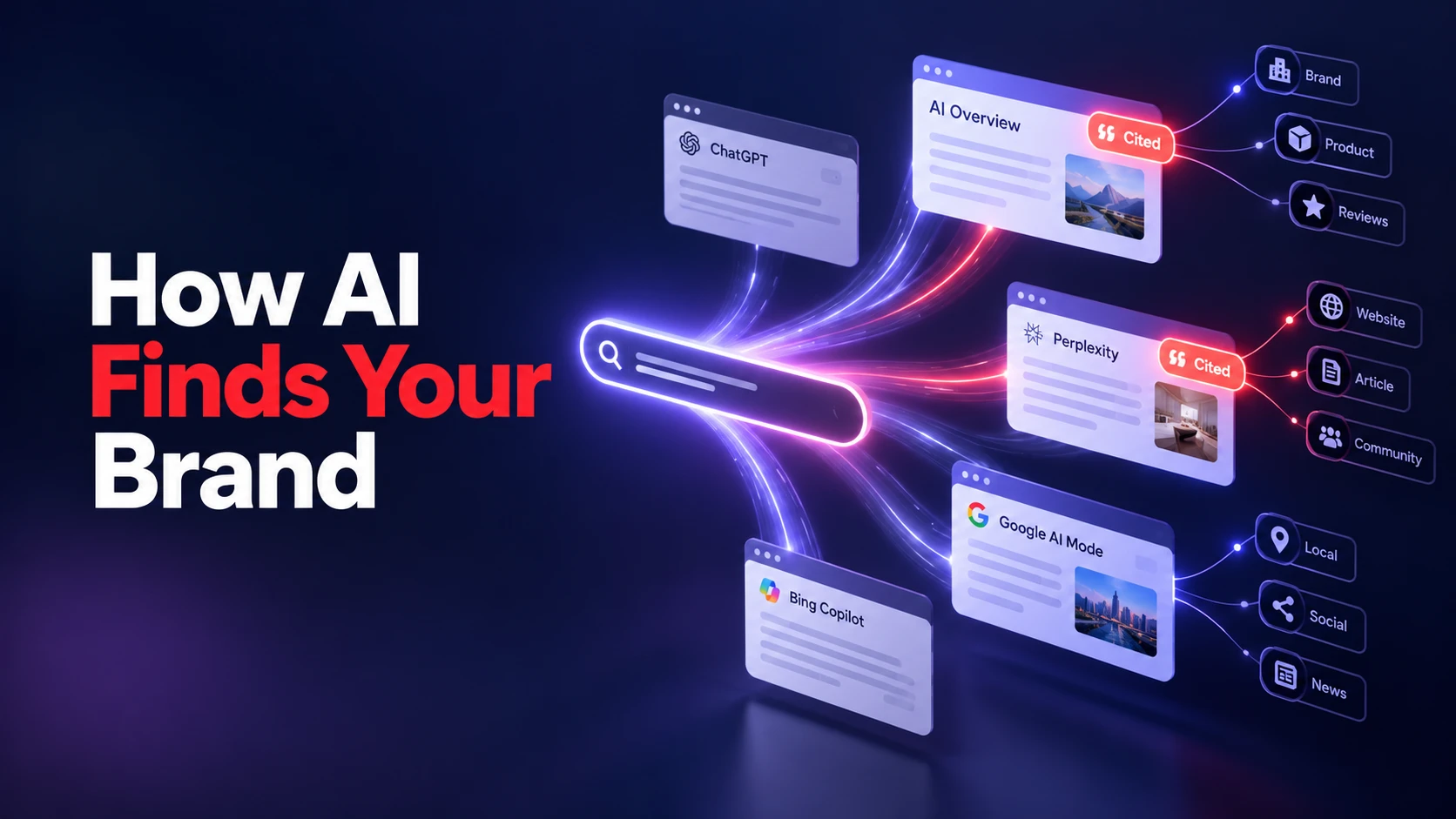
Quick answer: AI search engines split a prompt into several background searches, retrieve live pages and cite the ones they can parse and trust. To be cited, let AI crawlers in, mark your brand up as a clear entity, answer questions directly under question headings, and publish information other pages do not have.
The shift from recovering rankings to owning AI citations
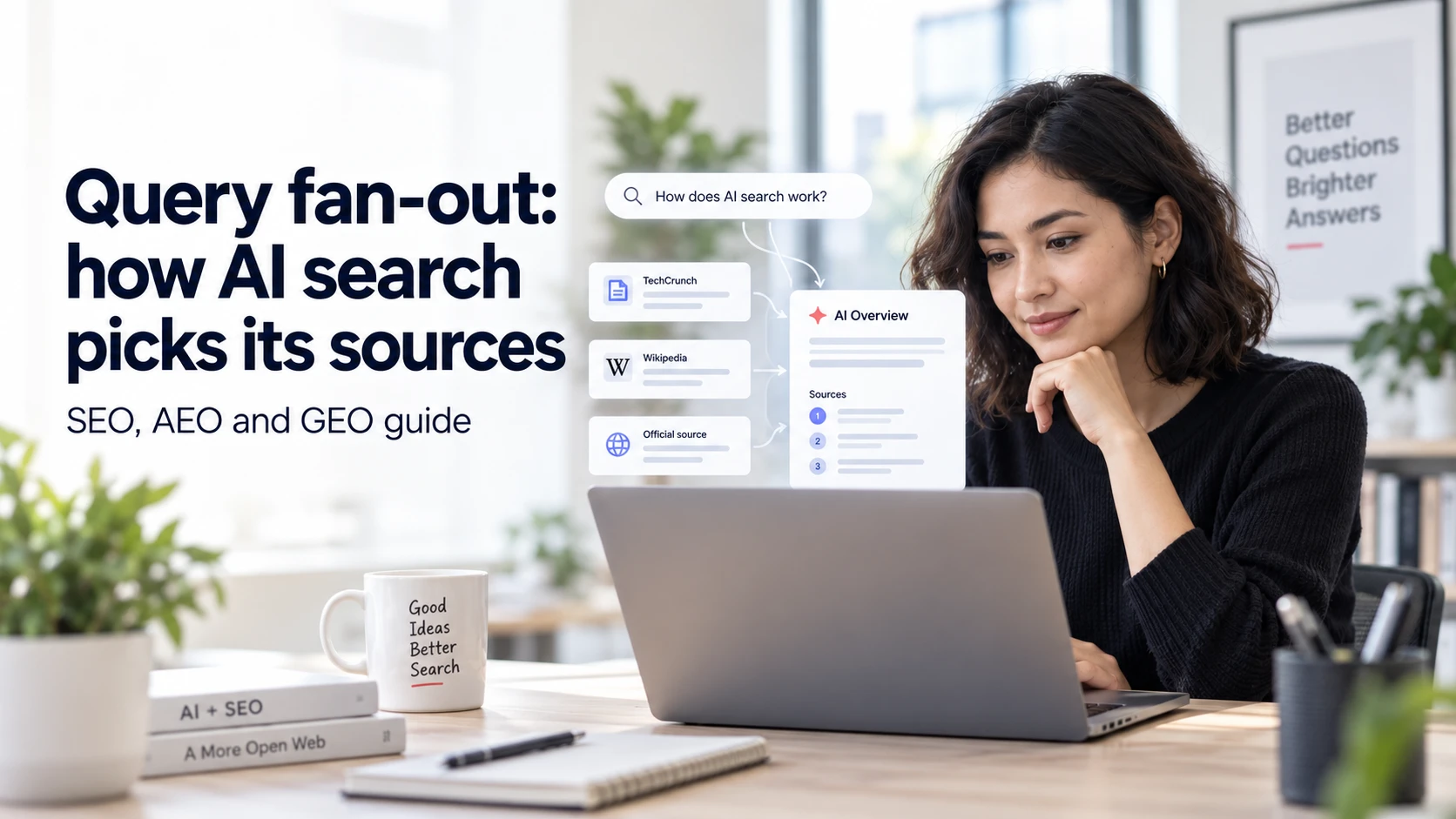
Search is no longer a simple database query returning ten blue links. Modern search engines decompose complex prompts into multiple background sub-queries (query fan-out) and synthesise answers with retrieval-augmented generation (RAG).
To win visibility across Google AI Overviews, ChatGPT Search, Perplexity and AI agents connected through the Model Context Protocol (MCP), your website has to evolve from passive text into structured entity data that AI crawlers and agentic workflows can parse without friction.
Core mechanics of agentic search and RAG systems
What is retrieval-augmented generation (RAG)?
RAG is the real-time mechanism where an LLM fetches current web documents, extracts key factual statements and cites those documents directly in the answer it generates.
What is query fan-out?
Query fan-out is how an AI agent splits one broad prompt into several discrete background sub-queries before assembling a single comprehensive answer. Each sub-query is another chance for your page to be retrieved, or missed.
What is entity resolution and mapping?
Entity resolution is the process of connecting your brand name, products and executives to established nodes in knowledge graphs such as Wikidata, the Google Knowledge Graph and Crunchbase.
What is information gain?
Information gain measures the new, unique data or expert analysis your page adds compared with the pages already ranking for the topic. Higher information gain raises the odds of an AI citation, because the model has a reason to quote you rather than anyone else.
What is agent-friendliness and MCP readiness?
Agent-friendliness means building pages, APIs and JSON endpoints so autonomous agents and MCP integrations can extract precise answers without rendering heavy client-side JavaScript.
The 4-stage AI search citation framework (ASC)
Stage 1: retrieval accessibility
- Make sure AI crawlers (GPTBot, OAI-SearchBot, ClaudeBot, PerplexityBot) are not blocked in robots.txt.
- Serve clean, semantic HTML with as little client-side rendering as possible.
Stage 2: entity recognition
- Deploy schema.org JSON-LD (Organization, Product, FAQPage, Person).
- Keep your NAP (name, address, phone) and official brand naming consistent across press releases and directory listings.
Stage 3: information gain extraction
- Place a concise, declarative one-to-two-sentence answer directly under each H2 and H3 question heading.
- Publish primary research, proprietary statistics or expert quotes that an offline LLM cannot generate.
Stage 4: citation and repeat retrieval
- Build topical coverage across social media, digital PR and authoritative industry publications, so third-party sources confirm your authority.
Technical checklist for AI search visibility
- Verify bot permissions. Check robots.txt so GPTBot, PerplexityBot and ClaudeBot can crawl your primary content paths.
- Optimise Core Web Vitals and responsiveness. Keep Largest Contentful Paint (LCP) under 2.5 seconds and Interaction to Next Paint (INP) under 200 milliseconds.
- Deploy JSON-LD structured data. Annotate every article with schema that includes sameAs social profiles, publisher details and the author's E-E-A-T background.
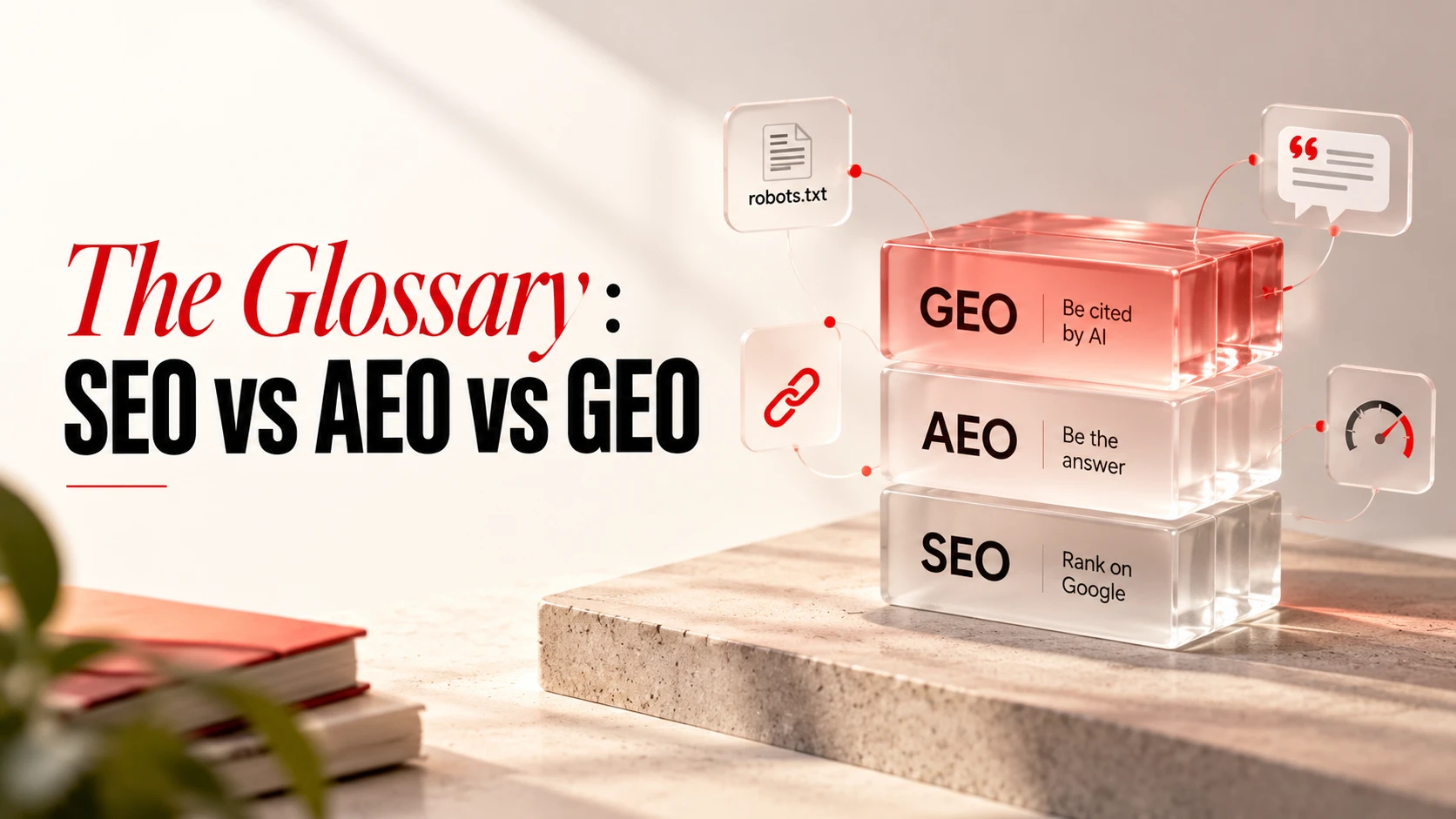
- Format for AEO direct extraction. Write headings as explicit questions (for example, "What is query fan-out?") and follow each with a direct definition paragraph.
Frequently asked questions
What is query fan-out?
Query fan-out is how an AI search engine splits one prompt into several background sub-queries, retrieves pages for each, and assembles a single answer from them.
How do I get cited by AI search engines?
Let AI crawlers in through robots.txt, mark up your brand with schema.org JSON-LD, answer questions directly under question headings, and publish original data competitors do not have.
Which AI crawlers should robots.txt allow?
GPTBot, OAI-SearchBot, ClaudeBot and PerplexityBot, on the paths that hold your primary content.
Want this done for your site?
Run a free audit and see exactly what to fix for Google and AI search.