SEO Audit vs. AI Visibility Audit: What's the Difference

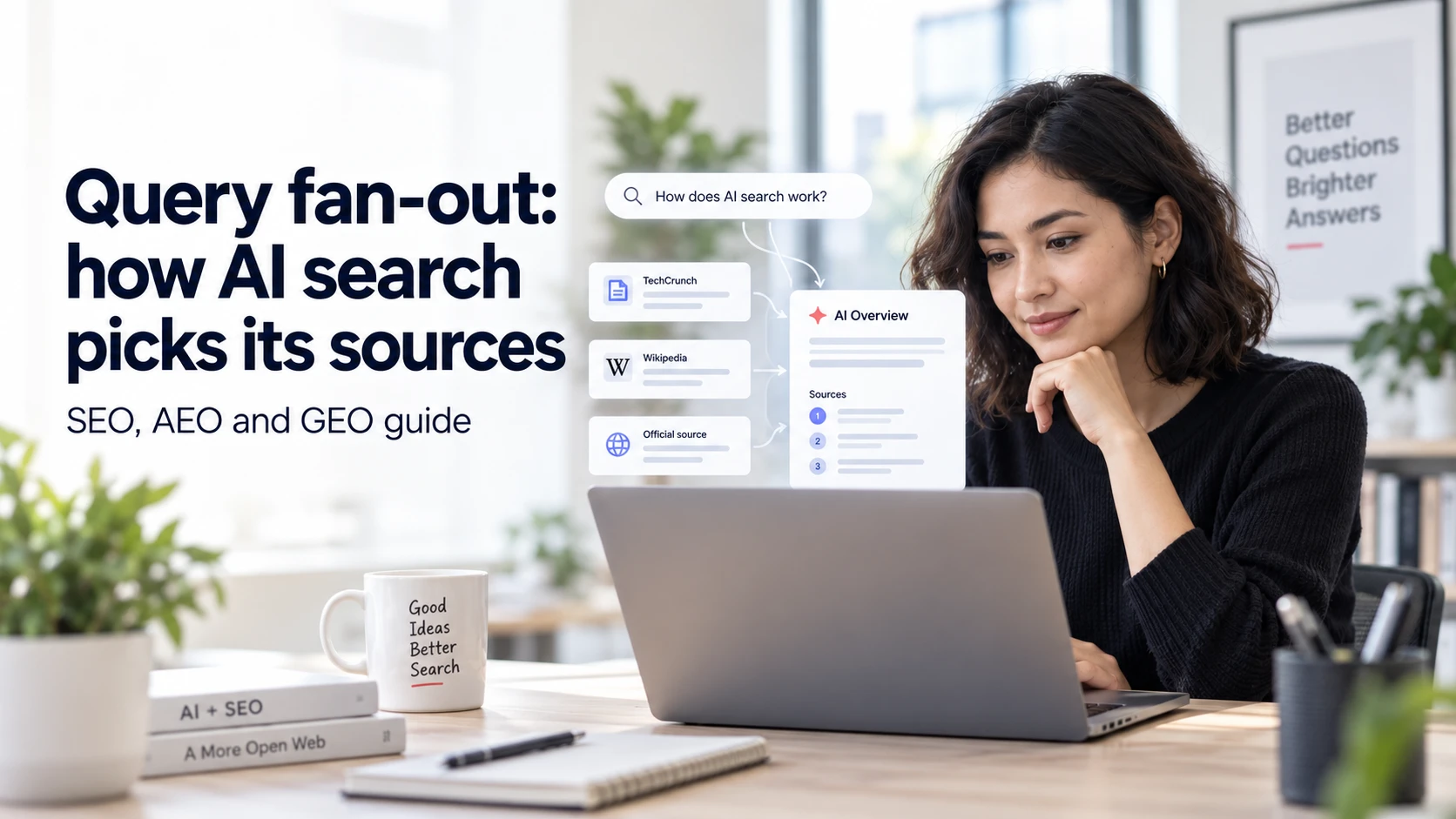
Search has split into two systems. One ranks your pages on a results list. The other reads your pages and repeats them inside an AI answer, often without a click. An SEO audit tool checks the first. An AI search visibility audit checks the second. In 2026 you need both, and here's how they differ.
What's the difference between an SEO audit and an AI visibility audit?
An SEO audit measures whether Google can crawl, index and rank your pages, looking at site speed, broken links, title tags, backlinks and keyword positions. An AI visibility audit measures whether answer engines like ChatGPT, Perplexity, Gemini and Google AI Overviews actually cite your content when someone asks a question. The first optimises for a ranking. The second optimises for a citation.
They overlap, but they are not the same job. A page can rank third for a keyword and still never appear in a single AI answer. Another page can be quoted by Perplexity every day while sitting on page two of Google. Different signals, different fixes.
What a traditional SEO audit actually checks
A traditional SEO audit inspects the mechanics that decide your position in a classic results page. It runs across three buckets: technical health, on-page quality and off-page authority.
Technical health covers crawlability, your XML sitemap, HTTPS, mobile rendering and page speed. Google's own Core Web Vitals thresholds sit here, and you can spot-check them with our Core Web Vitals tool before a full crawl. On-page quality looks at title tags, headings, internal linking and content depth against search intent. Off-page authority is mostly backlinks and, for local businesses, citation consistency.
Say you run a 40-page services site in Pune. An SEO audit might flag 12 pages with duplicate title tags, an LCP of 4.1 seconds on mobile and 3 broken internal links. Fix those and your rankings usually recover over a few weeks. That work still matters. It just doesn't tell you anything about AI.
What an AI visibility audit checks instead
An AI visibility audit checks whether large language models can find, parse and cite your content in generated answers. This is the emerging discipline people call GEO, generative engine optimisation, and the questions it asks are different.
It tests whether your pages are structured so a model can extract a clean, quotable answer. It checks for self-contained factual sentences, clear question-shaped headings, schema markup and a stated author or brand entity. It also runs real prompts against ChatGPT, Perplexity and Google AI Overviews to see if your brand is named, and which competitor gets cited when you are not.
Crucially, it measures share of voice inside answers, not position on a list. If someone asks "best payment gateway for Indian SaaS" and an AI names Razorpay, Cashfree and PayU but not you, that is a visibility gap no ranking report would ever surface.
Why rankings and citations diverge
Rankings and citations diverge because the two systems reward different things. Google's classic algorithm rewards authority and relevance to a query. An answer engine rewards extractability: how easily it can lift a correct, complete statement from your page and attribute it.
Three things commonly cause the split. A page buries its answer under 400 words of preamble, so the model can't extract a clean quote. A page hedges every claim, so nothing reads as citable fact. Or a page has no clear entity, so the model cannot decide who is speaking. You can rank well and fail all three.
A page written for a featured snippet often performs better in AI answers than one written purely for keyword density. Lead with the answer, then the evidence. Models copy the sentence that stands on its own.
Running both audits together
Run the two audits as one pass, not two projects. They share inputs, and the fixes reinforce each other. A clean crawl and fast pages help both Googlebot and the crawlers that feed LLMs. Clear structured content helps both a snippet and a citation.
Here is a practical order. First, fix technical blockers so both systems can reach your content. Second, restructure your highest-intent pages to answer their own headings in the first sentence. Third, add schema and a consistent brand entity so answer engines know who you are. Fourth, prompt-test your important topics across three or four AI engines and log which pages get cited. Our methodology page walks through how we score both sides on the same crawl, and the free audit checklist covers the manual checks.
Do this quarterly. AI answer surfaces change fast, and a page cited in January can drop out by April when a competitor publishes a cleaner version.
What this means for Indian businesses in 2026
For Indian businesses, this matters most where buyers research before they contact you. B2B services, SaaS, fintech and professional firms all lose visibility when AI answers name three competitors and skip them. A GST consultant in Delhi or a Razorpay-integration agency in Bengaluru now competes for a spot inside an answer, not only a spot on a list.
The cost of ignoring it compounds. If 20 to 30 percent of your category's high-intent questions now get answered inside ChatGPT or Google AI Overviews without a click, citation share is direct pipeline. A ranking you can measure. A citation you have to test for. Start by auditing both, then decide where the bigger gap sits. You can run a free audit on your own domain to see which pages already earn citations and which only earn rankings.
Want this done for your site?
Run a free audit and see exactly what to fix for Google and AI search.