How to Optimize Your Content for ChatGPT, Perplexity, and Claude Recommendations
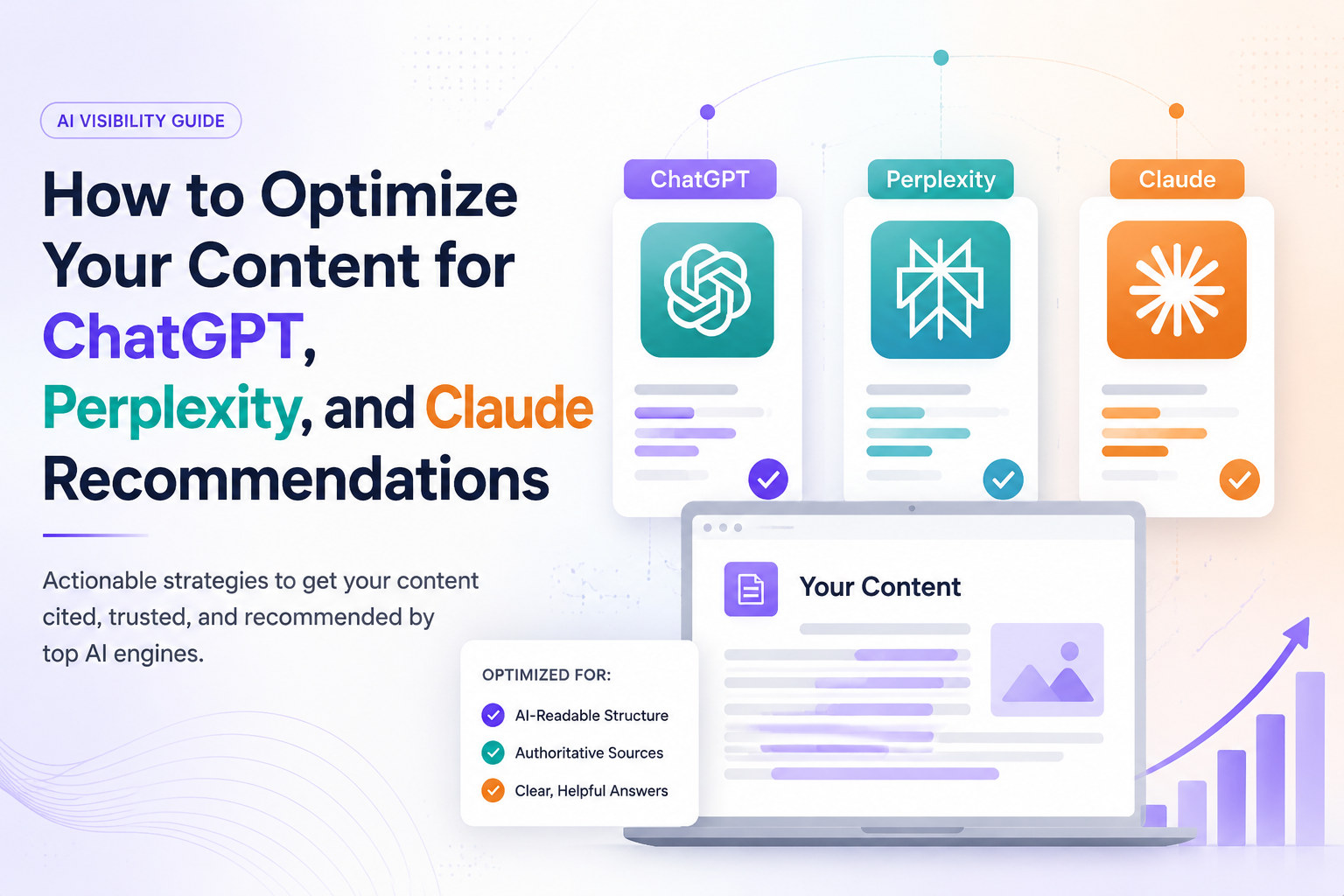
Getting recommended by ChatGPT, Perplexity, or Claude comes down to three things: a brand these tools can identify without guessing, answers written so a model can quote one sentence and be right, and enough agreement from other sites to back up what you say about yourself.
This guide walks through how that recommendation actually gets decided, then sets out a working plan to earn it. None of it replaces normal SEO. It builds on top of it.
What an AI recommendation actually is
An AI recommendation is the moment ChatGPT, Perplexity, or Claude names your brand inside a generated answer, whether or not that answer includes a link back to your site.
That is a different goal from ranking on a results page. A Google search hands the reader ten options and lets them choose. An AI answer picks a small number of names on the reader's behalf. Being one of those names, or being left out completely, is the real competition now. RankNexus maps this progression in more detail in Rank, Cited, Recommended: The New Visibility Ladder.
Why this is worth fixing now
AI-referred visitors convert at a noticeably higher rate than typical search traffic. A synthesis of six independent studies covering 680 million citations put AI search conversion at 14.2 percent, against 2.8 percent for standard Google organic traffic, roughly five times higher. That gap alone explains why brands are racing to appear inside AI answers instead of only chasing rank positions. RankNexus looks at why this traffic converts so well in Why AI Referrals Are Your Highest-Intent Traffic.
The second reason is how thin AI citations already are. An analysis of 200 million prompts found that even the single most-cited domain on any AI platform rarely earns more than 5 percent of total citations. The other 95 percent spread across thousands of sites. That is a long-tail market, not a winner-take-all one, and it leaves real room for smaller brands with strong content.
The third reason is where citations actually come from. One review of more than 23,000 branded citations across five AI engines found that 57 percent came from reviews and third-party social proof, 17 percent from directories, and only around 4.5 percent from a brand's own About, FAQ, or homepage content. Your own site plays a supporting role. Other sites carry most of the weight.
How ChatGPT, Perplexity, and Claude decide what to cite
Before an AI engine can recommend you, it has to work out who you are. That process runs in roughly the same order across most large language models, even though each one retrieves information differently underneath.
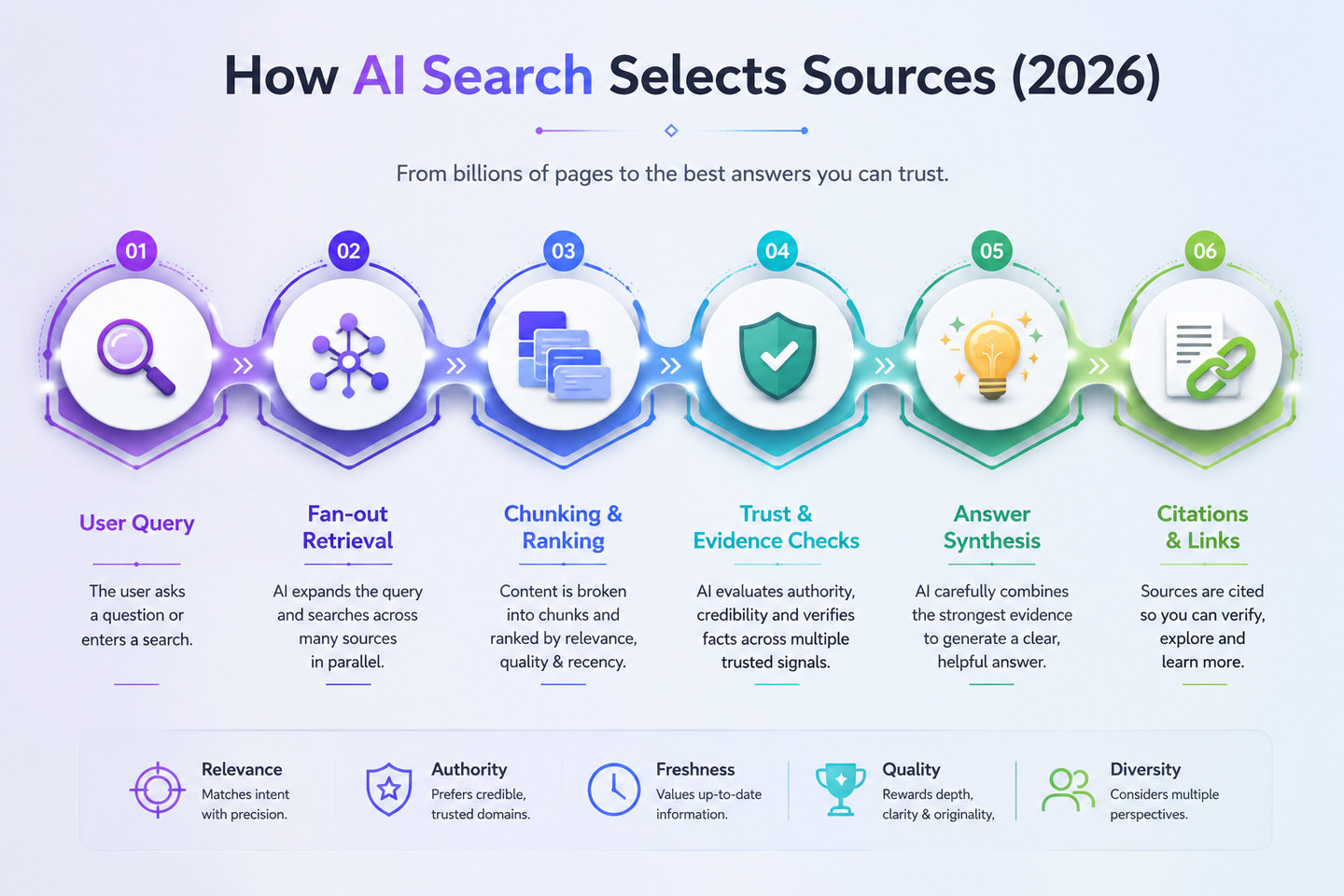
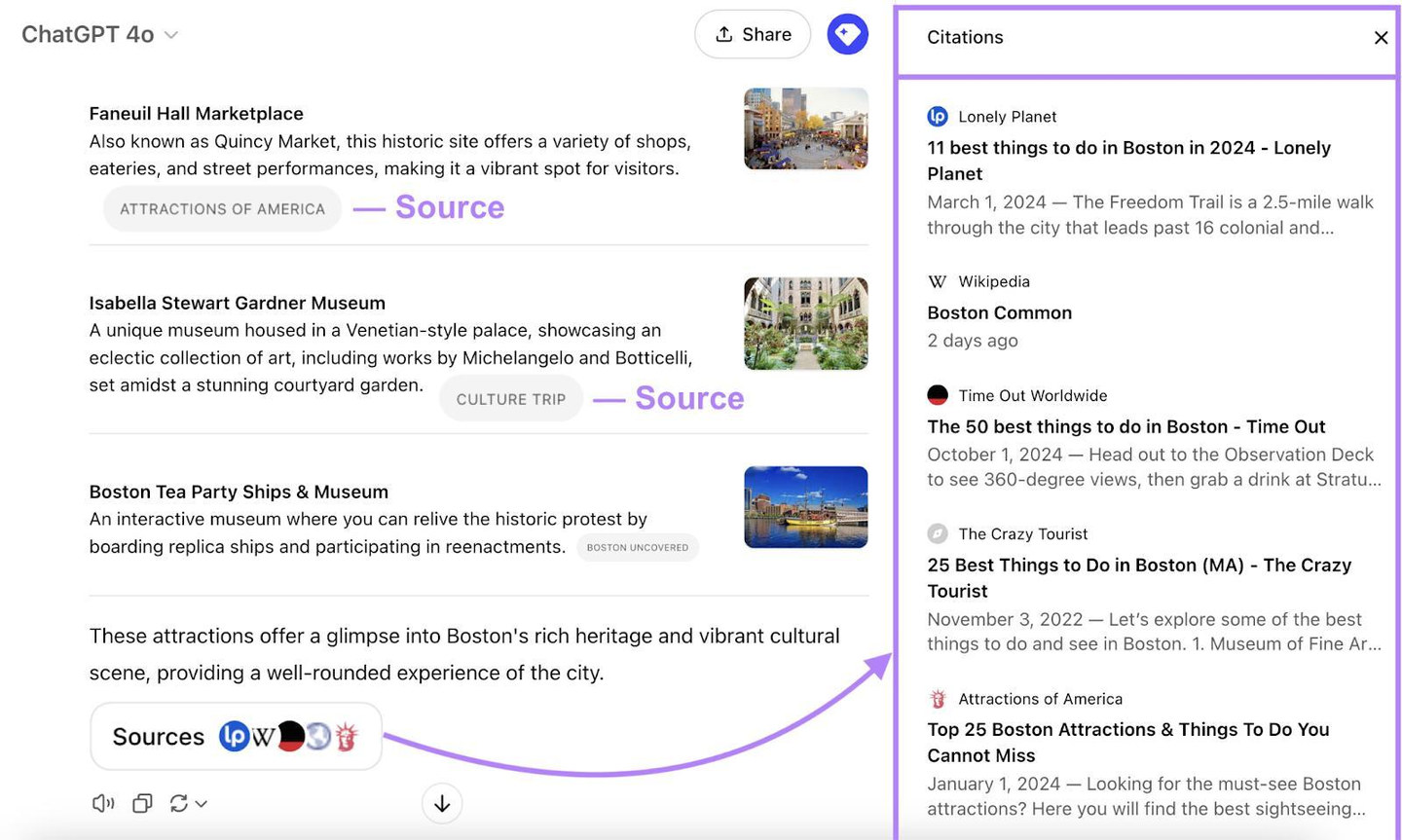
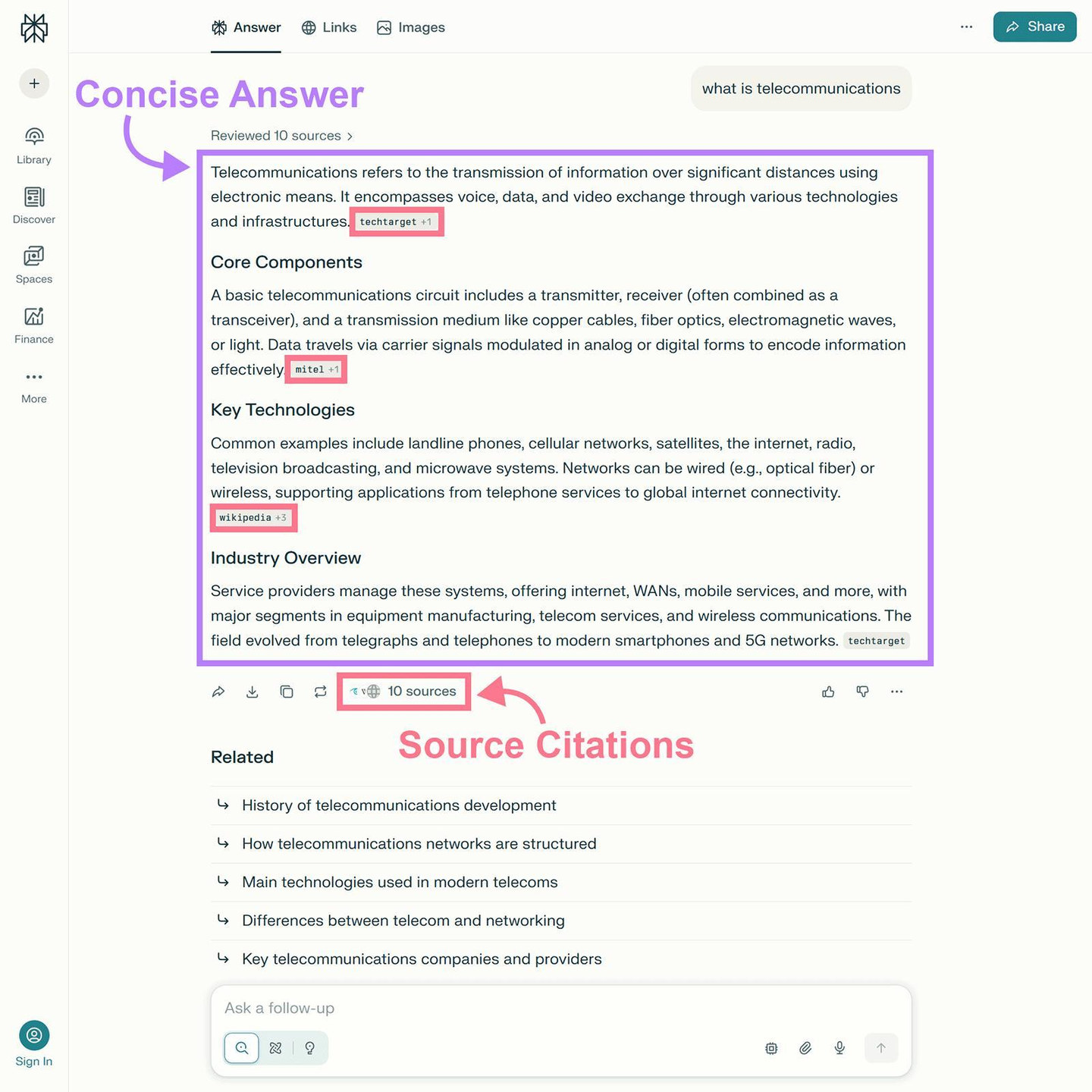
The step that trips up most brands is cross-site agreement. If your homepage calls you a marketing agency, your LinkedIn page calls you a software company, and a directory listing calls you a freelancer, the model has three conflicting signals and no way to resolve them. Confusion reads as low confidence, and low-confidence entities get left out of answers.
A working plan to earn AI recommendations
1. Standardize your brand entity everywhere
Write one description of your brand, two to three sentences, and use the same wording on your homepage, About page, LinkedIn company page, Google Business Profile, and any directory listing you control. Include what you do, who you serve, and where you operate. Correct every place that description already exists elsewhere online, even if it means asking a directory to update an old listing.
2. Lead every section with a self-contained answer
Write the first sentence of every section so it could stand alone as a quoted answer, with no earlier context required. This is the same bottom-line-up-front approach used for answer engine optimization and Google AI Overviews, and it applies just as directly to ChatGPT, Perplexity, and Claude.
Weak: “There are many things to think about when picking a CRM for a small team.”
Strong: “A small team CRM should cost under $30 per user per month, sync with email in under five minutes, and let you filter deals by stage without exporting data.”
The second version gives a model something specific to lift and quote. The first gives it nothing to work with. RankNexus has a fuller breakdown of this approach in What Is AEO? Answer Engine Optimization, Explained.
3. Add complete, accurate schema
Structured data does not force a citation, but it removes doubt about who you are. At minimum, add Organization or LocalBusiness schema with your name, address, and sameAs links to your verified social profiles. For content pages, add Article schema with a real author name, not a generic byline. FAQPage schema no longer earns Google rich results outside government and health sites, but AI engines still read it, so keep it on pages genuinely built around real questions.
4. Publish facts a model can extract without guessing
Replace vague claims with specific, sourced numbers wherever you can back them up. A model can extract “organic traffic grew 41 percent in six months after we fixed crawl errors” and quote it directly. It cannot extract “we deliver strong results” because there is nothing concrete inside that sentence. If you do not have a verified number yet, say so plainly rather than filling the gap with a vague claim.
5. Earn agreement from other sites
AI engines look for outside confirmation before they trust a claim about your business, the same way a careful reader would.
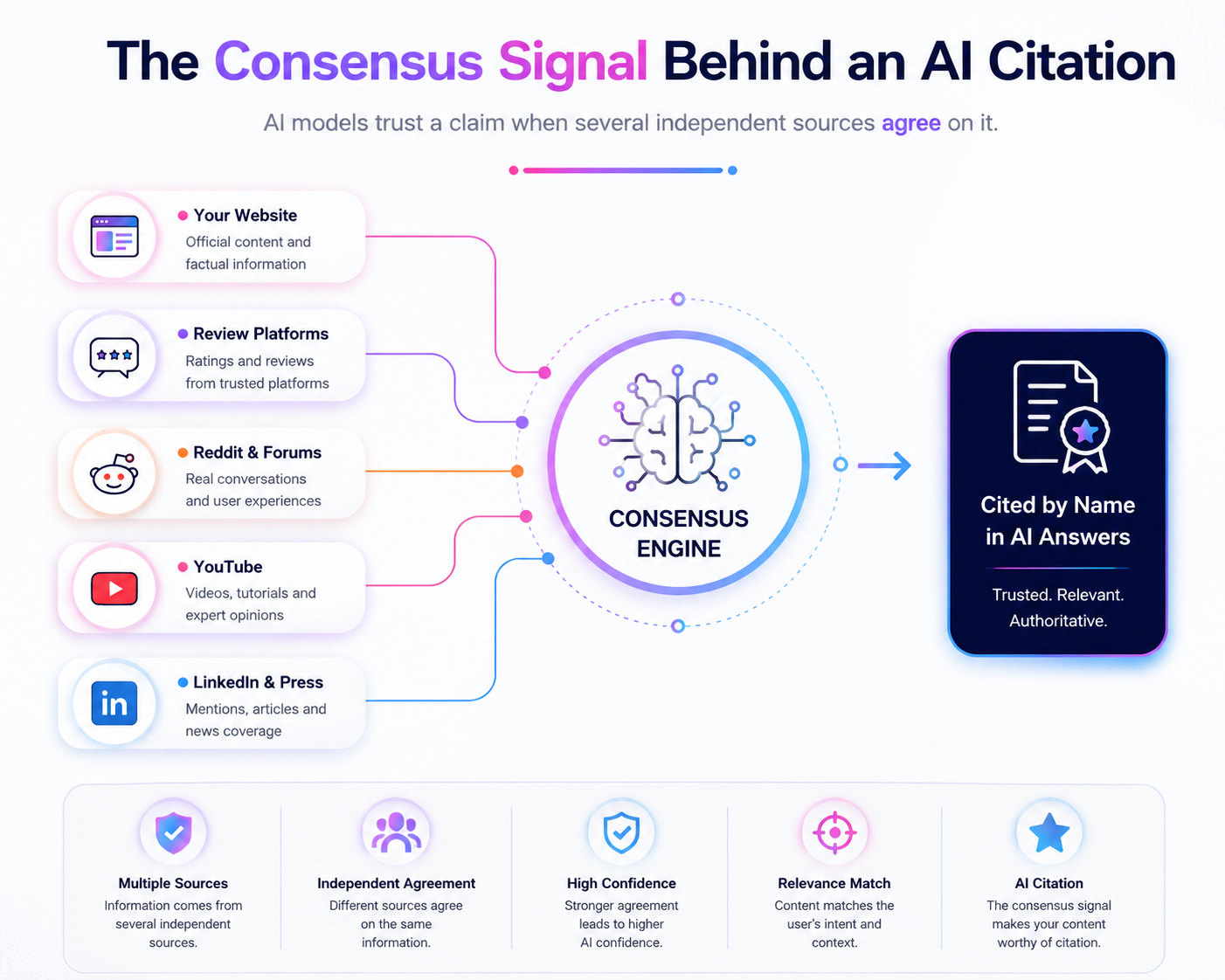
Reviews on platforms like G2 or Capterra, unprompted mentions in relevant Reddit or forum threads, YouTube demos or comparisons, and coverage in trade press all add independent weight behind what your own site says. None of these need to mention you constantly. A handful of specific, credible mentions across different site types does more than dozens of mentions confined to your own domain. RankNexus goes deeper on building this kind of presence in Community Is the New Link Building for AI Search.
6. Keep your crawler access open
Confirm that GPTBot, ClaudeBot, PerplexityBot, and OAI-SearchBot are not blocked in robots.txt, since blocking them removes you from consideration entirely, regardless of how well the content is written. Keep an llms.txt file at your root with a short, current summary of what your business does, your main products and services, and links to your best reference pages. Update it when what you offer changes, the same way you would update a sitemap.
7. Track citations and revisit the content
Run the same set of real customer questions through ChatGPT, Perplexity, and Claude every few weeks, in a fresh session each time, and note whether your brand appears and what gets quoted. Where you are missing, check whether the gap is a content problem, an entity consistency problem, or a lack of outside confirmation, and fix that specific gap rather than rewriting everything at once.
Where ChatGPT, Perplexity, and Claude diverge
Treating AI search as one channel is the most common mistake in this work. The three tools pull from different indexes and weigh different source types, so a page built only around what ChatGPT rewards will underperform on Perplexity, and the reverse is also true.
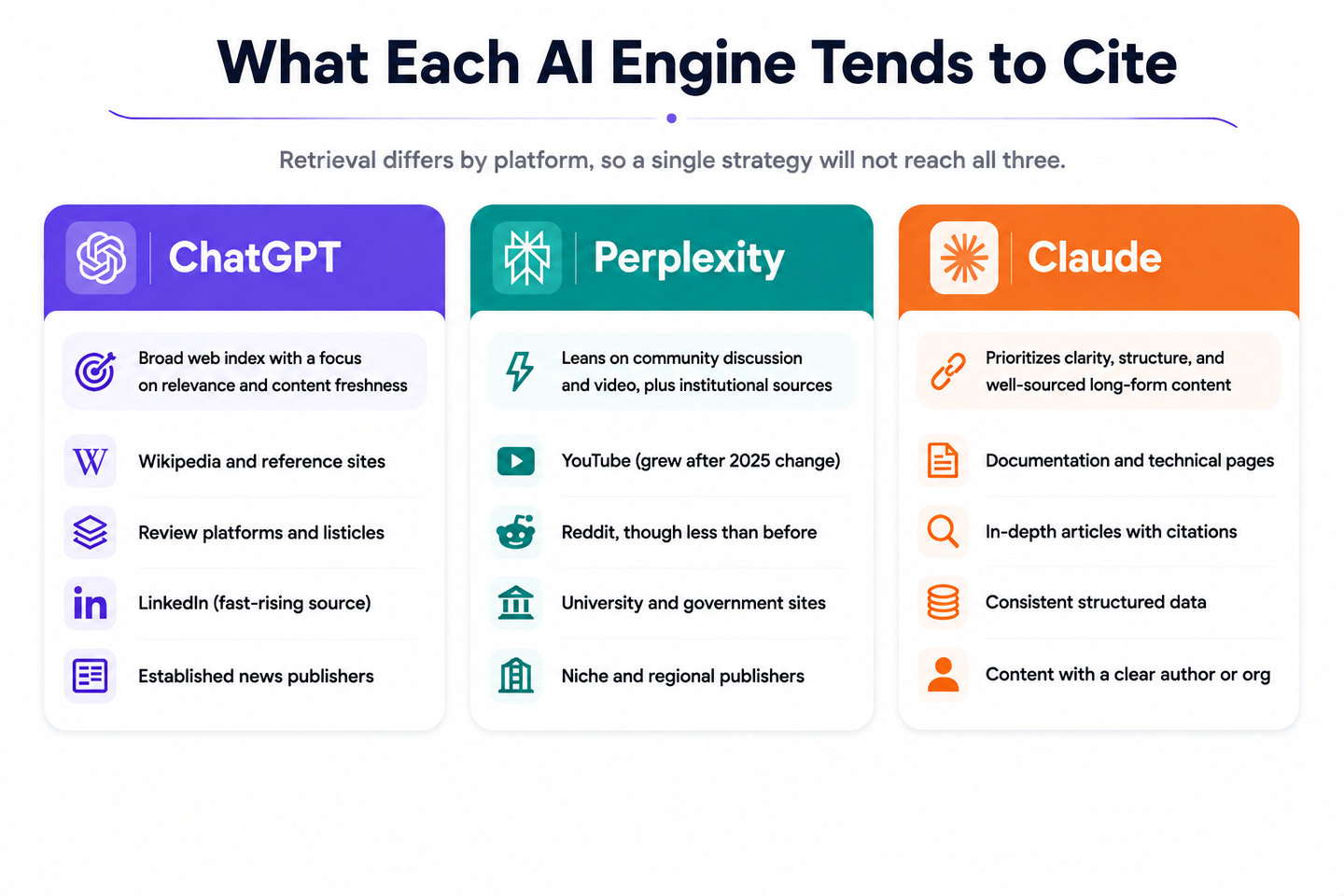
Independent tracking of ChatGPT and Perplexity citations found the two platforms share only about one in ten sources between them. That gap is why the plan above leans on outside validation across several site types rather than one. A single page built around only one engine will not cover every engine on its own.
Mistakes that keep brands out of AI answers
- Publishing generic AI-written filler with no specific facts, examples, or numbers to extract
- Blocking AI crawlers in robots.txt without checking first, often by accident during a security review
- Describing the brand differently across the homepage, LinkedIn, and directory listings
- Chasing one AI platform's habits while ignoring how the other two actually retrieve content
- Treating this as a one-time project instead of something to recheck every few months as citation patterns move
The short version
Being recommended by ChatGPT, Perplexity, and Claude is not a trick you apply once. It is the result of a brand these models can identify without guessing, content written so a single sentence can answer the question, and enough outside agreement to back up what you say about yourself. Fix the entity work first, then build outward from there.
Frequently asked questions
What is the difference between SEO and GEO?
SEO earns a ranking position on a search results page. GEO, short for Generative Engine Optimization, earns a mention inside a generated AI answer instead. The two are not separate disciplines. Clean technical SEO and clear content structure are the foundation both are built on, and GEO work adds entity consistency and outside validation on top. RankNexus covers this in full in GEO: How to Get Cited by ChatGPT, Gemini & Perplexity.
Can I pay ChatGPT or Perplexity to recommend my brand?
No, there is no paid placement inside ChatGPT, Perplexity, or Claude's organic answers as of 2026. Visibility comes from entity clarity, factual content, and third-party confirmation, not from an ad budget.
Does my site need to rank on Google to get cited by AI tools?
Not directly, since AI engines run their own retrieval rather than pulling straight from Google's index. That said, the same technical foundation, crawlable pages, clean structure, current sitemaps, tends to support both at once.
How long does it take to see AI citations improve?
Entity and schema fixes can show up within weeks, the next time a model refreshes its retrieval index. Building outside validation through reviews, forum mentions, and press coverage usually takes a few months, since that trust is earned gradually rather than switched on.
Should I block AI crawlers like GPTBot and PerplexityBot?
Only if you specifically want to stay out of AI answers, since blocking them removes you from consideration entirely. If your concern is AI training rather than AI search visibility, you can block GPTBot and Google-Extended while still allowing OAI-SearchBot and PerplexityBot to index you for citations.
Is FAQ schema still useful if Google restricted FAQ rich results?
Yes, for AI citation specifically, even though Google limited FAQ rich results to government and health sites in 2023. ChatGPT, Perplexity, and AI Overviews still read FAQPage schema when deciding what to quote, so it is worth keeping on pages genuinely built around real questions.
How do I know if my brand is already being cited?
Ask the AI tools directly. Run a handful of real customer questions through ChatGPT, Perplexity, and Claude in a signed-out or incognito session and read the full answer, not just the first line, since brand mentions often sit inside the body text rather than in a citation link.
What is llms.txt and do I need one?
llms.txt is a plain-text file at your site's root that gives AI crawlers a short, structured summary of what your business does and where to find your best pages. It is still an emerging convention rather than a confirmed standard, but it takes little time to set up and gives models a clean reference instead of forcing them to piece your offering together from scattered pages.
Want this done for your site?
Run a free audit and see exactly what to fix for Google and AI search.