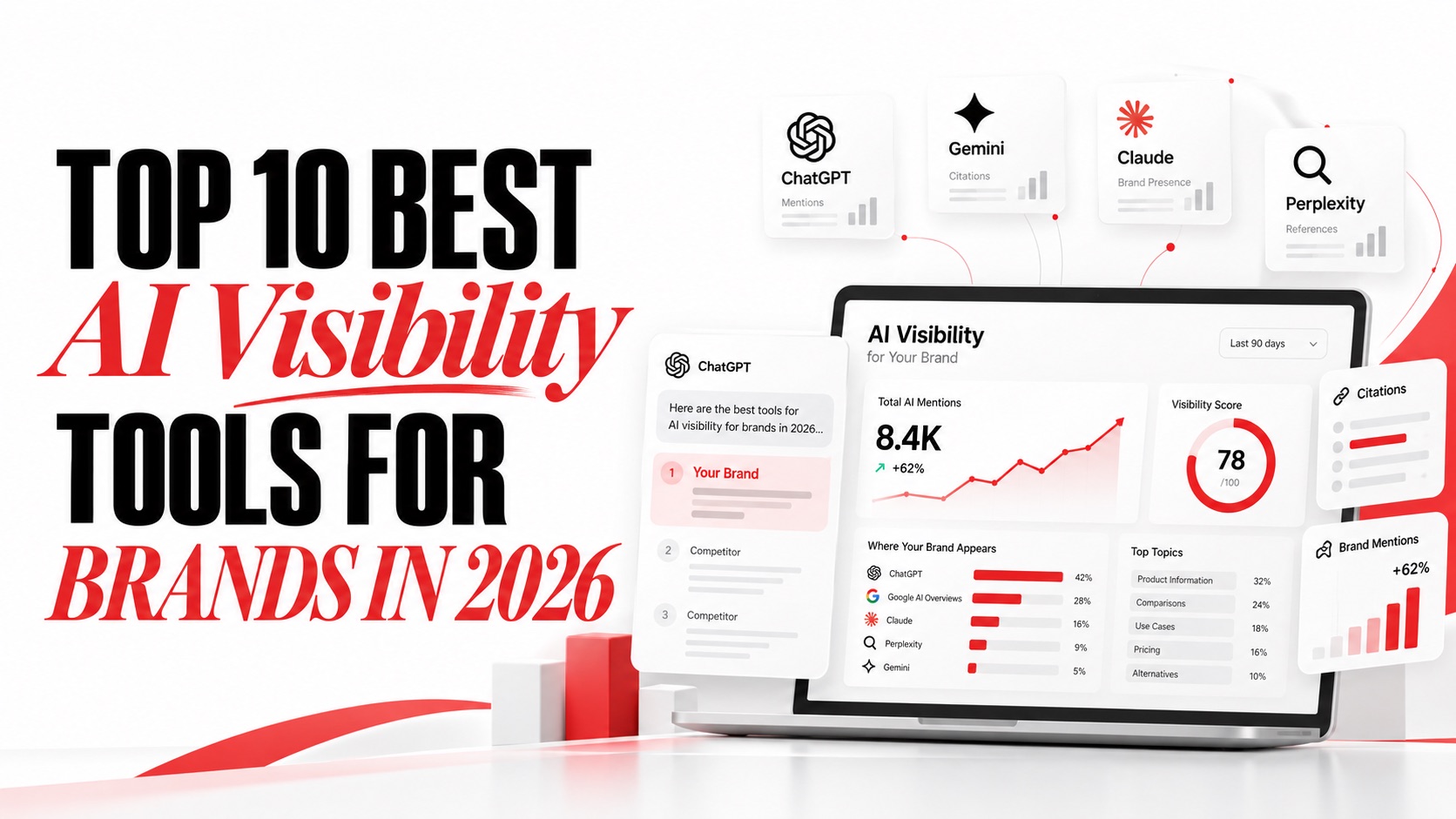
Free AI Visibility Tool in 2026: What Actually Works

Everyone wants to know if their brand shows up when someone asks ChatGPT for a recommendation. A free AI visibility tool promises to answer that without a card on file. We spent a fortnight running the popular free tiers against real prompts for Indian businesses, from a Bengaluru SaaS firm to a Pune dental clinic. Some gave us usable data in ten minutes. Others wanted an email and returned a single-engine snapshot that aged out by the weekend.
Does a free AI visibility tool actually work in 2026?
Yes, a free AI visibility tool works for a first look at whether ChatGPT, Gemini or Perplexity mention your brand, but the free tier almost always caps prompts, engines and refresh frequency. It answers "am I visible at all" well. It does not answer "am I gaining or losing ground each week against three competitors" without a paid plan.
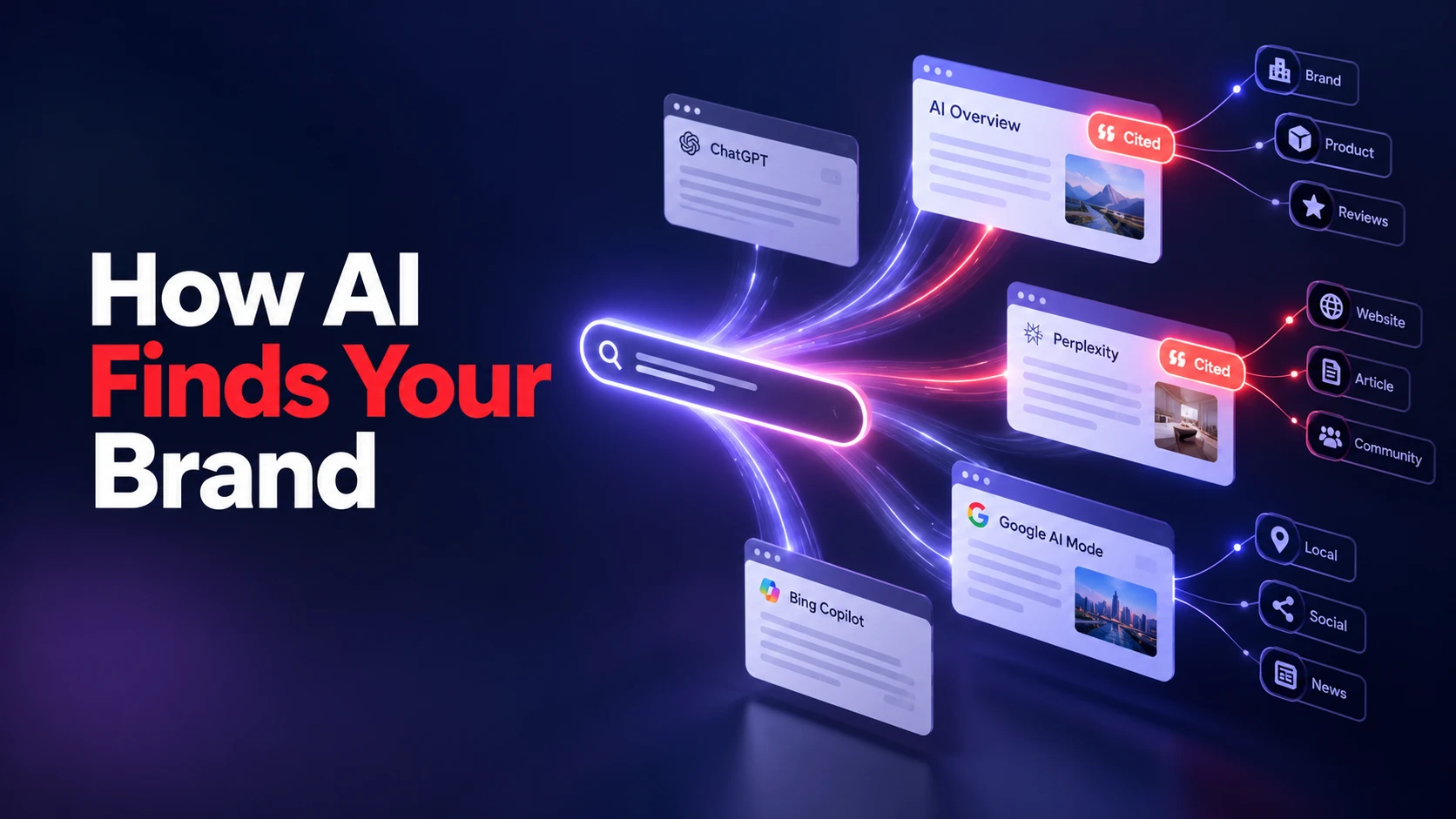
That gap matters more in 2026 than it did a year ago. AI answer engines now sit between your customer and your website far more often. When someone asks Perplexity for the best GST software in India, the three names it returns get the click. If yours is not one of them, a free scan will at least tell you that today.
Key facts
- What free tiers check
- brand mentions in AI answers
- Typical prompt cap
- 5 to 25 prompts a month
- Engines covered free
- usually 1 to 2 of ChatGPT, Gemini, Perplexity
- Refresh
- manual or weekly, rarely daily
What we tested and how
We ran each tool against the same 20 prompts a real buyer would type: "best payroll software for Indian startups", "affordable dental implants in Pune", "top Razorpay alternatives". We recorded whether the tool detected our test brands, which engines it queried, how often it refreshed, and what it asked for in return.
The test brands were deliberately mixed: one well-known fintech that AI engines already cite freely, one mid-sized B2B tool with patchy coverage, one local clinic with almost no AI presence. That spread showed us where free tools help and where they simply confirm you are invisible without telling you why.
Note: AI answers are non-deterministic. The same prompt can return different brands on two runs an hour apart. Any tool that shows a single result without noting variance is over-simplifying what it found.
Where free tools genuinely help
Free tiers earn their place in three situations.
If you have never checked your AI visibility, a free scan tells you in ten minutes whether you exist in these answers at all. That is worth doing before you spend on anything.
They also suit a single-location local business. Say you run a dental clinic in Pune with one main service query that matters. A free monthly check on "best dentist in Pune" across two engines is often enough to see if you are named. Pair that with a real audit of your Google Business Profile using our GMB audit tool, because AI engines lean heavily on your local citations and reviews when they answer local prompts.
The third case is a sanity check before a pitch or a board update. You want one clean snapshot, not a subscription. A free tool delivers exactly that.
Where free tools stop being useful
Free tiers break down the moment you need to track change over time. Most cap you at 5 to 25 prompts a month. A B2B SaaS firm targeting eight buyer queries across three engines needs 24 prompt-runs for a single weekly snapshot. That is 96 runs a month. Every free tier we tested ran dry inside the first week.
The second wall is competitor tracking. Knowing you appear in 40 percent of answers means little without knowing your rival appears in 75 percent. Nearly every free tier locks competitor comparison behind the paid plan.
Third, free tools rarely tell you why you are missing. They report the gap. They do not tie it back to thin content, weak schema, or the fact that no third-party site describes you the way the engine needs. That diagnostic step is where the actual work starts.
Good use of a free tier
- One-time visibility check
- Single local query tracking
- Snapshot before a client pitch
Poor use of a free tier
- Weekly multi-engine tracking
- Comparing three competitors
- Diagnosing why you are missing
Free tier versus paid: what the money buys
The honest comparison is not free versus paid quality. It is scope. A free tool and a paid tool both query the same engines. The paid plan removes the caps and adds the analysis layer.
| Capability | Typical free tier | Typical paid plan |
|---|---|---|
| Prompts per month | 5 to 25 | 200 to unlimited |
| Engines covered | 1 to 2 | 3 to 5 plus AI Overviews |
| Refresh frequency | Manual or weekly | Daily |
| Competitor tracking | Rarely | Yes |
| Why-you-are-missing analysis | No | Usually |
| Price (India, monthly) | ₹0 | ₹1,500 to ₹15,000+ |
For a solo founder checking one query, free wins. For anyone managing visibility as an ongoing job, the free tier becomes a demo you outgrow in a fortnight. That is by design, and it is a fair trade if you know it going in.
How to get real value from a free tool
Run it properly and a free tier still earns its keep.
- Pick your five highest-intent prompts, the ones a ready-to-buy customer types, not vanity searches.
- Run each prompt twice on different days to see how much the answer varies.
- Note whether you are named, mentioned in passing, or absent.
- Record which competitor names appear instead of yours.
- Check the source pages the engine cited, because those are the pages you need to match or beat.
That last step is the one most people skip. When Perplexity cites a comparison article that leaves you out, getting into that article moves you faster than any on-site change. Our content freshness checker helps you spot which of your own pages have gone stale enough that engines stopped trusting them.
Tip: Use the same prompts every time you check. Consistency is what lets you see movement. Changing the wording each month means you are measuring the prompt, not your visibility.
What to fix once you know you are missing
A free tool ends at the diagnosis. The fixes are the same regardless of which tool found the gap. AI engines assemble answers from pages they trust, so your job is to become one of those trusted sources.
Start with structured data. Clean schema helps an engine understand what you are and who you serve. For local businesses, our local business schema generator produces the markup Google and downstream AI engines read. Then work on being described by others: citations, comparison pages, and directory listings that name you in the same breath as the queries you want.
Content that directly answers buyer questions in plain language gets lifted more often than marketing copy. Write the page that answers the exact question, lead with the answer, and keep it current. That is the whole game, and it is why a free scan is a starting line, not a finish.
Free tools tell you where you stand today. Closing the gap is a monthly discipline across prompts, engines and the pages that cite you. Run a free audit with RankNexus to see which AI engines mention you and which name a competitor instead.
If this was useful, you can make RankNexus a preferred source on Google so our next posts show up for you first.
Frequently asked questions
Is there a free AI visibility tool that actually works in 2026?
Yes. Several free tiers accurately detect whether ChatGPT, Gemini or Perplexity mention your brand for a given prompt. They work well for a one-time check or a single tracked query. The catch is the cap: most limit you to 5 to 25 prompts a month and one or two engines, so weekly multi-engine tracking forces a paid plan within a fortnight.
Why does my brand show up in ChatGPT one day and disappear the next?
AI answers are non-deterministic, meaning the same prompt can return different brands on different runs. Models sample from many trusted sources and vary their output. This is why a single free scan can mislead. Run each prompt at least twice on separate days and treat consistent absence, not one miss, as your real signal.
Do free AI visibility tools cover Indian search queries properly?
They cover them as well as the underlying engines do, since they simply query ChatGPT, Gemini or Perplexity. For queries like "best GST software in India" the results are reliable. Local queries depend heavily on your Google Business Profile and citations, so run a GMB and citation check alongside any visibility scan for accurate local results.
Can a free tool tell me why I am not appearing in AI answers?
Rarely. Free tiers report the gap, not the cause. They will show that a competitor is named and you are not, but they do not tie it to thin content, missing schema, or a lack of third-party pages describing you. That diagnostic layer is almost always behind a paid plan or a manual audit.
How many prompts do I actually need to track my AI visibility?
For a solo founder, five high-intent prompts run across two engines is enough for a first read. A B2B business tracking eight buyer queries across three engines needs roughly 24 runs per snapshot, or about 96 a month for weekly tracking. That volume exceeds every free tier, which is where the upgrade decision comes from.
Is checking AI visibility the same as checking Google rankings?
No. Google ranking tools tell you your position in the blue links. AI visibility tools tell you whether an answer engine names your brand inside its generated response, where there is no ranked list. A page can rank on page one of Google and still be absent from the AI answer, so the two need separate checks.
Do I need a paid tool if I only have one location and one main service?
Usually not. A single-location business with one main query is the ideal case for a free tier. A monthly check on your main prompt across two engines covers you. Spend your budget instead on the inputs AI engines read: accurate NAP details, strong reviews, and clean local schema on your site.
Will improving my website actually change what AI engines say about me?
It helps, but on-site work alone is not enough. Engines assemble answers from pages they trust, including third-party comparison articles and directories that mention you. Clean schema and up-to-date pages make you eligible; being named on the sources the engine already cites is what gets you into the answer. Work both together.
How often should I recheck my AI visibility?
Monthly is enough for most businesses; weekly makes sense during an active push or a competitive launch. Use the exact same prompts each time, because changing the wording measures the prompt rather than your progress. Because AI answers vary run to run, look for trends over three or four checks rather than reacting to a single result.
Want this done for your site?
Run a free audit and see exactly what to fix for Google and AI search.