Multi-Platform AI Visibility Tool: Cross-Engine Tracking

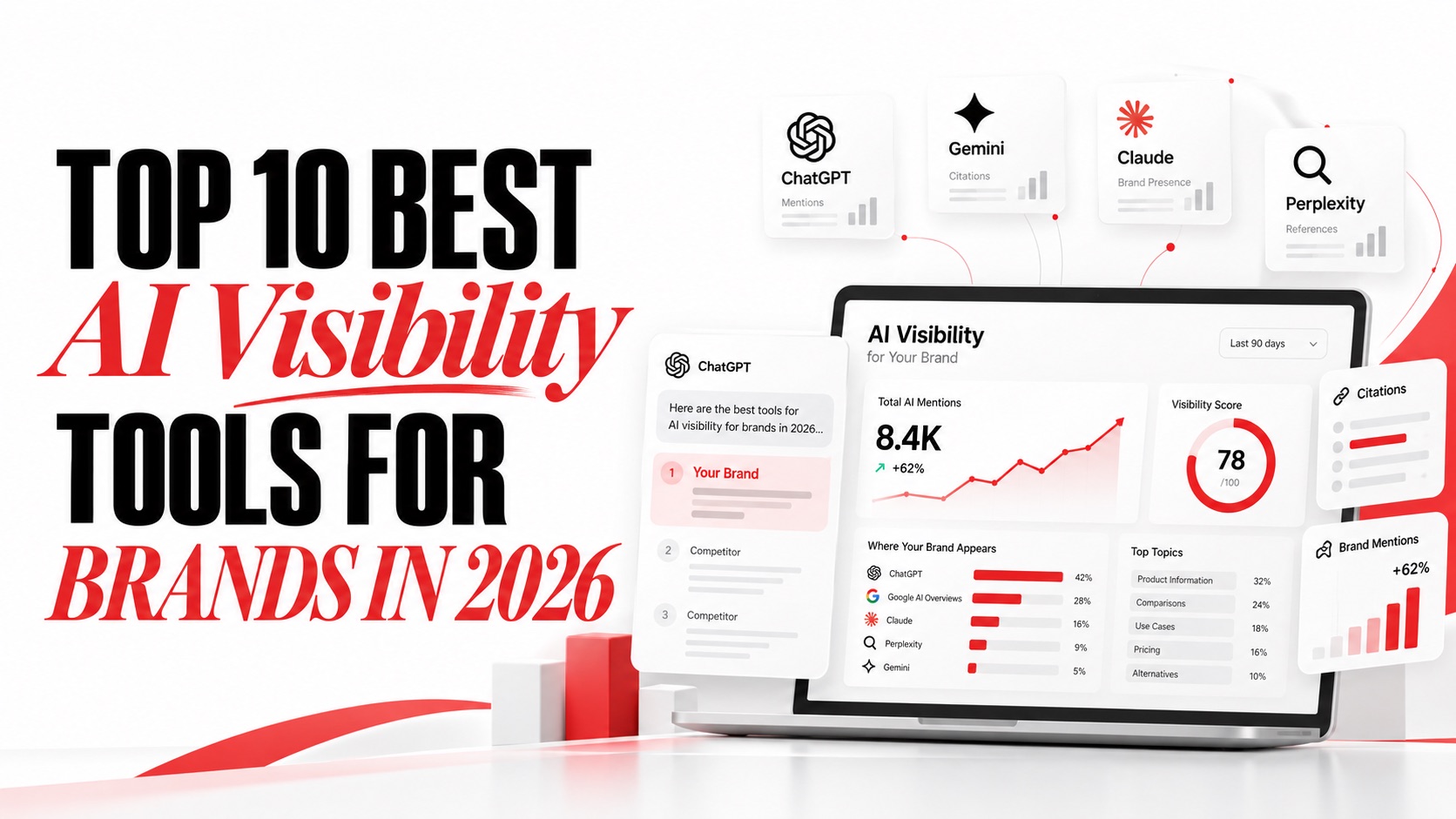
You now have four answer engines that can mention your brand or ignore it: ChatGPT, Gemini, Perplexity and Google AI Overviews. Each pulls from different sources, refreshes on its own schedule, and phrases answers in its own way. Checking them one at a time by hand is slow and you can't compare like with like. A multi platform ai visibility tool solves that by running the same prompts across every engine and logging what each one says about you.
Key facts
- Engines to cover
- ChatGPT, Gemini, Perplexity, Google AI Overviews
- What to track
- mentions, citations, share of voice, sentiment
- Cadence
- daily or weekly prompt runs
- Output that matters
- which engine cites which source
What a multi-platform AI visibility tool actually does
A multi-platform AI visibility tool queries several AI answer engines with the same set of prompts, records whether your brand appears, captures the exact wording and any linked sources, then reports the results side by side. Instead of you asking ChatGPT "best CRM for Indian startups" and then repeating it in Gemini, the tool runs all four on a schedule and stores every answer.
That matters because the four engines rarely agree. Perplexity might cite your comparison page while AI Overviews pulls a competitor's Reddit thread. You only see that gap when the results sit in one view. The tool turns a scattered manual chore into a tracked metric you can move.
Why single-engine checkers leave you blind
Most "AI visibility" tools watch only one surface, usually ChatGPT, and treat it as a proxy for the rest. It isn't. Gemini leans on Google's index and your Business Profile. Perplexity favours fresh, citable pages with clear structure. AI Overviews pulls from ranking web results plus its own synthesis. A page that wins in one can be invisible in another.
Say you run a 40-page SaaS site and rank on page one of Google for your category. AI Overviews might quote you often. But if ChatGPT was last trained before your rebrand, it could still name your old product. Track only ChatGPT and you'd panic. Track only AI Overviews and you'd think you'd won. You need both readings to know where the work is.
Watch out: A tool that checks ChatGPT once a week is not multi-platform coverage. If it can't show you Gemini, Perplexity and AI Overviews in the same report, you're guessing about three of the four places buyers actually ask.
The features that separate real coverage from a badge
Plenty of tools claim four-engine support. Fewer do it in a way you can act on. When you compare options, check for these:
- Simultaneous prompt runs, so the same question hits all four engines on the same day and results are genuinely comparable.
- Citation capture, meaning the tool records which URL each engine linked, not just a yes/no mention. This tells you which of your pages is doing the work.
- Share of voice per platform, so you see your mention rate against named competitors on each engine separately.
- Sentiment and accuracy flags, catching when an engine describes you wrongly or with the wrong pricing.
- Prompt libraries you control, because the questions your buyers ask are tailored to your category and region.
- History and change alerts, so a drop in Perplexity citations pings you the day it happens, not at month end.
A tool missing citation capture is the most common trap. It'll tell you that you were mentioned but not why, which leaves you no lever to pull.
How the four engines source answers differently
Each engine has its own supply chain for answers, and that changes what you optimise. Here's the short version.
| Engine | Main source | What earns a mention |
|---|---|---|
| ChatGPT | Training data plus live browsing | Broad, repeated web presence; strong entity clarity |
| Gemini | Google index and Knowledge Graph | Solid Google rankings, clean structured data |
| Perplexity | Live web with heavy citation | Fresh, well-structured, quotable pages |
| Google AI Overviews | Ranking web results plus synthesis | Page-one relevance and clear direct answers |
Read across that table and the practical point lands: there is no single fix. Winning in Perplexity often means tightening how quotable and current your pages are, which is why a content freshness check is worth running before you blame the engine. Winning in Gemini leans more on classic Google signals and structured data.
A worked example: reading a cross-platform report
Say you sell accounting software to Indian SMEs and you run 20 buyer-intent prompts across all four engines for a fortnight. The report comes back like this: ChatGPT names you in 6 of 20 answers, Gemini in 11, Perplexity in 4, AI Overviews in 9.
The low Perplexity number is your signal. You dig into the captured citations and find Perplexity keeps quoting a two-year-old listicle that ranks you fourth. Your own comparison page, which is stronger, never gets pulled because it lacks a clear, liftable answer near the top.
You rewrite the opening of that page to answer the main question in 50 words, add a comparison table, and refresh the publish date with real edits. Two weeks later you re-run the same 20 prompts. Perplexity mentions climb, and because the page is now cleaner, AI Overviews picks it up too. That loop, measure then fix then re-measure, is the entire job. Our own methodology is built around running it on a fixed cadence rather than once.
What it costs and what to check before you pay
Pricing for multi-platform AI visibility tools in India ranges widely, from roughly ₹2,000 a month for a light single-brand tracker to well over ₹20,000 a month for agency-grade seats with large prompt volumes. Cost usually scales with how many prompts you run and how often, since each run is a real API call to each engine.
Before you commit, confirm three things. First, that all four engines are genuinely live in the plan you're buying, not "coming soon". Second, how many prompt runs your tier includes per month, because a cheap plan with 50 runs won't cover a serious tracking set. Third, whether you can export the raw citations, so your findings aren't locked inside one dashboard. Our pricing page lists the run limits per tier so you can size this against your prompt list.
Tip: Build your prompt list from real buyer language before you subscribe. Pull questions from your sales calls, support tickets and search queries. Twenty sharp prompts beat two hundred vague ones, and they cost less to run.
Where this fits alongside your existing SEO
AI visibility work sits on top of your SEO, not instead of it. Three of the four engines still lean on the open web and Google's index, so a page that ranks well and reads clearly is already doing most of the heavy lifting. Structured data, fast pages and consistent brand entities feed every engine at once.
The difference is the feedback loop. Traditional rank tracking tells you position 4 in Google. AI visibility tracking tells you whether that position translates into a citation when a buyer asks a question in natural language. The two together give you the full picture. You can see how we connect them across the full feature set, and a good starting move is checking your entity and structured-data basics with a local business schema generator if you serve a location or region.
Start by tracking all four engines for two weeks, find the one where you're weakest, and fix the pages it cites. Run a free audit to see where your brand stands across ChatGPT, Gemini, Perplexity and AI Overviews today.
Found this helpful? Set RankNexus as a preferred source on Google and our new articles will surface in your Top Stories.
Frequently asked questions
Which tool tracks visibility across ChatGPT, Gemini, Perplexity and Google AI Overviews at the same time?
Look for a dedicated multi-platform AI visibility tool that runs your prompts across all four engines on a schedule and logs each answer with its citations. RankNexus does this, and so do a handful of others. The test is simple: if a tool can't show Gemini, Perplexity and AI Overviews results in one report next to ChatGPT, it isn't truly multi-platform.
Why does ChatGPT show my old brand name but AI Overviews shows the current one?
ChatGPT relies partly on training data with a cut-off date, so it can lag behind a rebrand or product change by months. AI Overviews pulls from live Google results, which reflect your current pages sooner. The gap is normal. It usually closes once ChatGPT's browsing catches your updated pages, but tracking both is the only way to confirm.
Do I need a separate tool for each AI engine?
No, and that's the point of a multi-platform tool. Running four single-engine checkers means four subscriptions, four prompt lists and no easy way to compare results. A single tool that queries all four with the same prompts on the same day gives you comparable numbers and one dashboard, which saves both cost and hours of manual checking.
How often should I run cross-platform visibility checks?
Weekly is a sensible default for most businesses, with daily runs on high-priority prompts if you're actively fixing pages. Answer engines refresh on different clocks, so a single one-off check is a snapshot, not a trend. Set a fixed cadence, keep the prompt list stable, and you'll actually see whether your changes moved the numbers.
Can these tools track competitors too?
Yes. Most credible multi-platform tools report share of voice, meaning your mention rate against named competitors on each engine. This is often more useful than your own number alone, because it shows whether a low citation rate is your problem or the whole category being under-represented in that engine's answers.
My page ranks on Google but AI Overviews never cites it. Why?
AI Overviews favours pages that answer the question directly and early, not just pages that rank. If your relevant answer is buried three scrolls down, the engine may synthesise from a competitor who states it in the first paragraph. Move a clear, self-contained 40 to 60 word answer near the top and re-check after a couple of weeks.
Is AI visibility tracking worth it if I'm a small local business?
It can be, especially if buyers in your city ask engines for recommendations. For local businesses, Gemini and AI Overviews matter most because they lean on Google's index and Business Profile data. Start by making sure your NAP details and schema are clean, then track a small set of local-intent prompts rather than paying for a large national prompt volume.
Will these tools show me exactly which page an engine cited?
The good ones will. Citation capture, recording the URL each engine linked, is the feature that turns a report into an action list. Some cheaper tools only report a mention as yes or no, which leaves you unable to see which page won or lost. Confirm citation capture is included before you subscribe.
Do prompt runs cost more the more engines I track?
Usually yes, because each run is a real API call to each engine. Tracking one prompt across four engines counts as four runs. That's why pricing tiers are built around monthly run limits. Keep your prompt list tight and buyer-focused so you spend runs on questions that actually influence a purchase rather than broad, low-intent queries.
Want this done for your site?
Run a free audit and see exactly what to fix for Google and AI search.