Do Instant Indexing Tools Work or Are They Scams?

TL;DR: Paid instant indexing tools rarely deliver what their sales pages promise for ordinary web pages. So do instant indexing tools work or are they scams? For normal content, mostly the second. Google indexes based on quality and crawl signals, not pings. If you have 40 new blog posts sitting unindexed and a Twitter ad promises to "force" them in for ₹2,000, that pitch is selling relief from anxiety, not a working pipeline into Google's index.
A narrow set of cases exists where fast indexing genuinely works. A much larger set involves paying for nothing. Let's separate them.
Key facts
- Google Indexing API scope
- job posting and livestream pages only
- Search Console URL Inspection
- manual request, no bulk API
- Typical paid tool claim
- 1,000 URLs indexed in 24-48 hours
- What Google actually promises
- no indexing guarantee, ever
Do instant indexing tools work or are they scams?
Most instant indexing tools do not work as advertised for ordinary pages, and many cross into scam territory. Google has never offered a general "index this now" button. Tools claiming one typically ping URLs or misuse the Indexing API, which was built only for job and livestream content. Neither approach reliably indexes a blog post or product page.
Asking do instant indexing tools work or are they scams gets a cleaner answer once you know the real Google feature being stretched into a false promise. The Indexing API exists and works. It was never built for the pages most people try to index.
What Google actually offers for fast indexing
Google provides two legitimate routes, both with hard limits. Knowing them tells you instantly when a paid tool is lying.
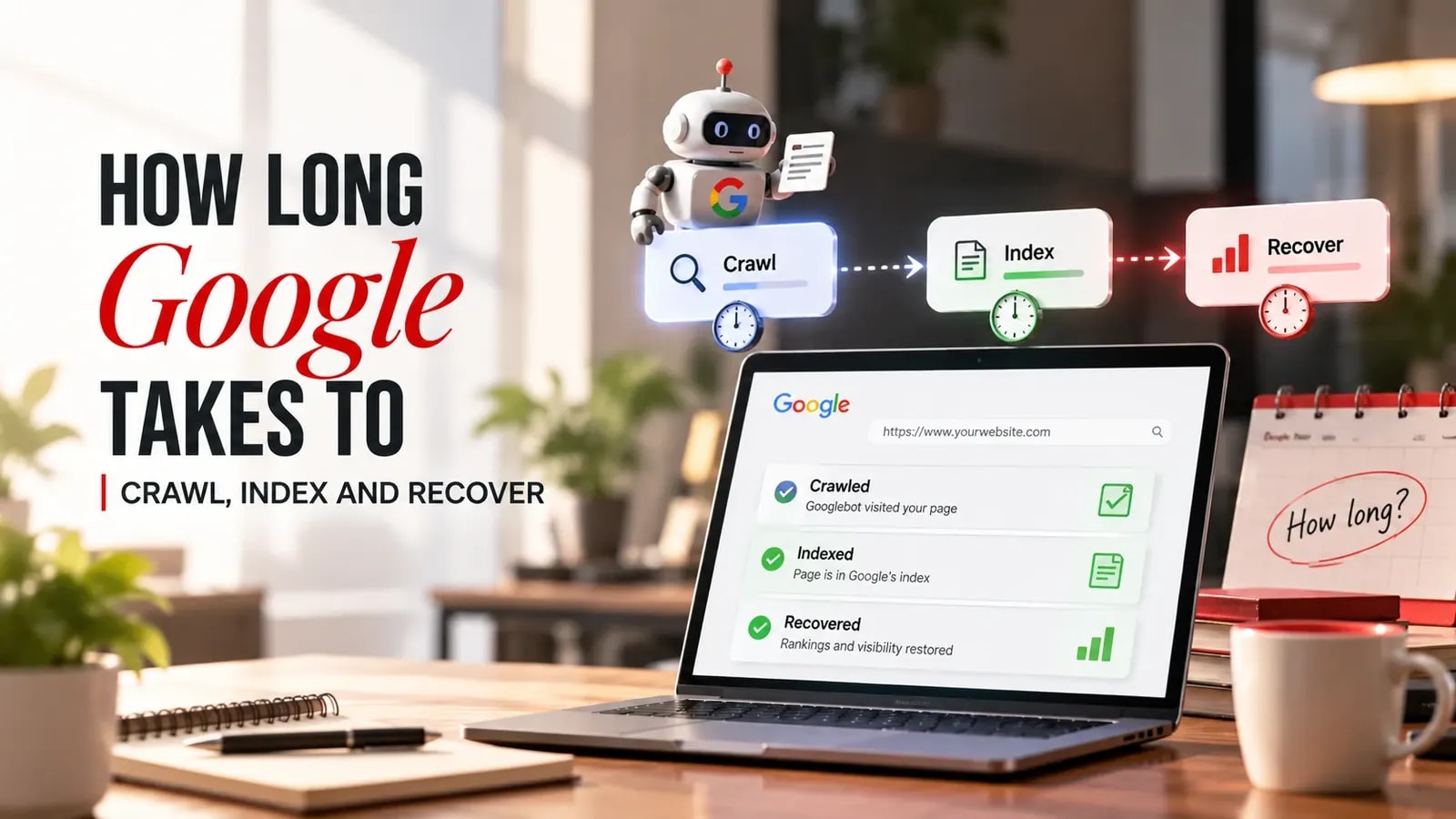
First is the URL Inspection tool in Search Console. Paste a single URL, click "Request Indexing", and Google adds it to a priority crawl queue. It is manual, one URL at a time, with a daily quota. No bulk upload, no API available. Google's own Search Console documentation is explicit: requesting indexing does not guarantee inclusion.
Second is the Indexing API. This one is programmatic and fast, so every paid tool references it. But check the scope carefully: it officially supports only pages with JobPosting or BroadcastEvent (livestream) structured data. Google states this plainly. Using it for a standard article is off-label, and Google ignores those submissions.
Watch out: If a tool claims it uses the "Google Indexing API" to index your blog posts, e-commerce pages or affiliate content, it is using an API outside its documented purpose. Those submissions carry no weight for that content type.
Why unindexed pages usually stay unindexed
A page Google refuses to index is sending a signal. Pinging it faster will not change that signal. In most audits we run, the cause falls into one of a few categories, and none is fixed by a paid indexer.
Thin or duplicate content ranks first. If your page reads like a template with three product names swapped in, Google crawls it, decides it adds nothing, and drops it. A crawl budget problem comes second: on a large site, Google spends its limited crawl on your important URLs first, leaving a new page to wait. Technical blocks also matter, whether a stray noindex tag, a robots.txt disallow, or a canonical pointing elsewhere.
Say your 200-product store publishes six new collection pages. Three index in a day, three do not. A paid tool happily "submits" all six and takes credit for the three Google was going to index anyway. The three that stay out are usually thin category pages with 40 words of copy. No ping fixes that.
The paid indexing market, honestly
The market splits into three rough tiers. Only one is defensible.
| Tier | What it does | Does it work? |
|---|---|---|
| Legitimate API relays | Submit job/livestream URLs via the real Indexing API | Yes, for that content type |
| Grey-hat submitters | Fire the Indexing API at all page types | Sometimes a short-lived bump, unreliable |
| Ping-and-pray services | "Ping" search engines and third-party crawlers | No measurable Google effect |
Grey-hat submitters burn honest people. That tier sometimes works for a week because Google crawls the URL after the API call, then the page falls out again if it lacks quality signals. You see a spike, renew your subscription, and mistake a crawl for a lasting index.
The bottom tier is closest to a scam. Pinging XML sitemaps or third-party crawlers has had no reliable effect on Google indexing for years. Charging a monthly fee trades on the fear that your content is invisible. And that fear, not any technical shortfall, is the real product being sold.
Worth paying for
- API relay for genuine job listings
- Faster crawl on livestream event pages
Skip it
- "Index 1,000 blog URLs overnight" claims
- Monthly ping subscriptions for a small site
- Any "guaranteed indexing" language
When a fast-indexing tool is actually justified
Real cases exist where speed matters and the legitimate API earns its place. A job board publishing hundreds of listings daily needs those live in search within hours, and the Indexing API is built for exactly that. A media site running scheduled livestreams has the same need for its event pages.
Outside those two scenarios, the honest position is that you almost never need a paid indexer. A healthy 50-page site with a clean sitemap gets crawled fine. If you run a large site and crawl budget is the genuine bottleneck, the fix is server logs, internal linking and sitemap hygiene, not a subscription. Our internal link finder exists partly because internal links do more for indexing than any pinging service by showing Google which pages you consider important.
What to do instead of buying an indexer
Work through the causes Google can see before you spend anything. This sequence fixes the real blocks that keep pages out.
- Check Search Console coverage: open the Pages report and read the exact reason a URL is excluded (Crawled - currently not indexed, Discovered - not indexed, Duplicate, and so on).
- Confirm the page is crawlable: no noindex meta tag, no robots.txt disallow, and a self-referencing canonical.
- Submit a clean XML sitemap and verify the URL is actually in it.
- Add internal links from pages that already rank, so Google finds and values the new page.
- Improve the content itself if it reads thin, since "Crawled - currently not indexed" is usually a quality verdict.
- Use URL Inspection to request indexing for the handful of URLs that matter most.
Spending your time here, not a subscription, addresses what a paid tool cannot: the reason Google chose not to index the page. For a broader technical pass, our site checklist covers the same ground.
Tip: Before blaming indexing, wait a full crawl cycle. A brand-new page on a low-authority site can take days to weeks. "Not indexed yet" is often exactly that, not "broken".
How we treat indexing at RankNexus
We do not sell an instant indexer, and we tell clients to be sceptical of anyone who does. When RankNexus tracks a page that will not index, we look at the Search Console exclusion reason, the internal link count and the content depth first. Our data on grey-hat API submitters is not something we can stand behind as durable, because the pages that stayed indexed after those calls were almost always the ones with genuine quality signals to begin with.
Boring work wins. Clean structure, real content, sensible internal links, a correct sitemap. To see how we approach it across a whole site, our methodology page lays out the process we follow.
Want more guides like this in your Google results? Add RankNexus as a preferred source on Google.
Frequently asked questions
Do paid instant indexing tools actually work or are they scams?
On normal blog, product and affiliate pages, most do not work as advertised, and the cheapest ping-based ones are close to scams. They cannot force Google to index a page. The only genuine fast-indexing route is Google's Indexing API, which officially covers job posting and livestream pages, so any tool applying it to other content is operating outside its documented purpose.
Is using the Google Indexing API for blog posts against the rules?
It is not banned, but it is off-label. Google documents the Indexing API as supporting only JobPosting and BroadcastEvent pages. Firing it at articles or product pages may trigger a crawl, yet Google gives those submissions no special indexing weight and can ignore them. Any lasting indexing you see comes from the page's own quality, not the API call.
My pages say 'Crawled - currently not indexed'. Will an indexing tool fix it?
No. That status means Google crawled the page and chose not to index it, usually a quality or duplication judgement. Pinging it again does not change the verdict. Improve the content depth, add internal links from pages that already rank, and remove near-duplicate version. Fix the reason Google excluded it, then request indexing through URL Inspection.
How long should I wait before assuming a page won't index on its own?
On an established site, give it several days to a couple of weeks. On a new or low-authority site, three to four weeks is normal. Check the Search Console Pages report for the exact status. If it shows 'Discovered - currently not indexed', it is a crawl-priority delay, not a failure, so improve internal linking rather than buying a tool.
Does requesting indexing in Search Console guarantee my page gets indexed?
No. The URL Inspection 'Request Indexing' button adds your URL to a priority crawl queue, but Google's documentation states clearly that it does not guarantee inclusion. If the page is thin, duplicate or blocked by a noindex or robots rule, requesting indexing achieves nothing. It only helps pages that are already index-worthy but waiting to be crawled.
Can pinging services or sitemap pings speed up Google indexing?
Not in any measurable way by Google. Google deprecated sitemap ping endpoints and has said pinging has no meaningful effect on crawling in years. Third-party ping services target crawlers that do not influence Google's index. Paying a monthly fee by pinging is spending money on an action Google effectively ignores.
I run a job board. Are indexing tools worth it for me?
Yes, this is the legitimate use case. Job boards publish JobPosting pages, which the Google Indexing API officially supports, so submitting them can get listings crawled within hours instead of days. A reputable relay by that content type earns its place. Just confirm the tool submits real JobPosting structured data and does not overreach into your other pages.
Why did my pages index after using a paid tool, then drop out later?
The tool likely triggered a crawl through an off-label API call, so Google visited the page and briefly indexed it. When Google reassessed and found weak content or duplication, it dropped the page again. The crawl was real; the lasting index was not. That short spike is what makes grey-hat indexers feel effective while adding no durable value.
Do I need any indexing tool if I have a small site with a sitemap?
No. A healthy site under a few hundred pages with a valid XML sitemap and reasonable internal linking gets crawled and indexed by Google without help. Crawl budget only becomes a real bottleneck on large sites with thousands of URLs. With a small site, spend the money on content and internal links instead.
Want this done for your site?
Run a free audit and see exactly what to fix for Google and AI search.